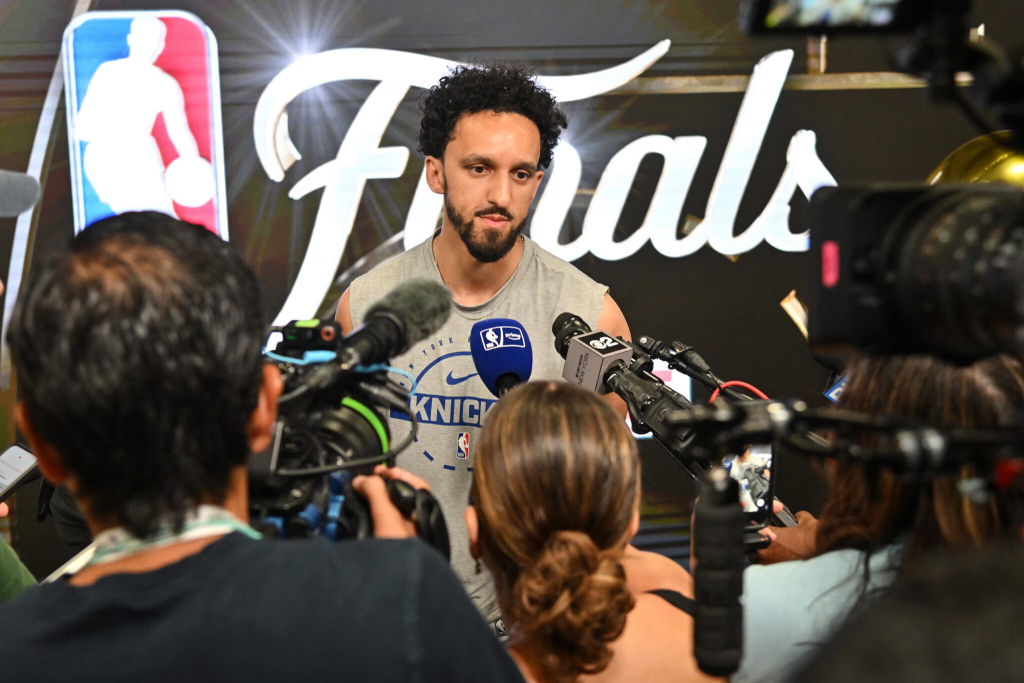
Landry Shamet and Keldon Johnson discuss their journey to their first NBA Finals during a Reddit AMA.
Landry Shamet and Keldon Johnson have both proven to be key contributors off the bench for the Knicks and Spurs.
New York Knicks guard Landry Shamet and San Antonio Spurs Forward Keldon Johnson answered questions about their first NBA Finals appearance at Game 2 Media Day.
Y’all’s success and execution against the Cavs for the sweep put you in a situation where you had the opportunity to both rest and begin preparing for your Finals opponent. What did that process look like? Outside of film, did you watch the games on your own and/or with teammates?
Shamet: Definitely watch the games at home. Obviously, when you have that much down time, the luxury in that is you’re able to take care of your body and rest a little bit, but you want to balance that with staying sharp. There’s value to staying in the rhythm of a playoff series and trying to maintain your competitive edge, which the other team has while they’re still playing. So you don’t want to completely unplug and relax, but it’s a good opportunity to do so. So kind of work in the balance there and watching games at home when you have a little time to relax.
Landry, you and Deuce off the bench have been letting it fly from 3 with confidence all year and you guys have taken it to another level in the playoffs. How do you stay ready and engaged before you even step onto the floor, and what goes through your head once you’re out there?
Shamet: It’s a process throughout the year. It’s not about the moment or deciding to do so come playoff time. Trial and error throughout the season. Your job remains the same throughout, whether it’s regular season or playoffs. Obviously, it’s heightened now, given that your role and job could change from night to night. So I think all of us, everybody on the bench, even our starters, we all do a great job of responding to the call of whatever’s needed on a night-to-night basis.
Landry, do you know you are a fashion and fitness icon?
Shamet: Fashion and fitness icon? No, but I’ll take it. Whatever y’all want me to be, I’m happy to be it, so we’ll take it.
How much resilience and support did it take to navigate going down with the shoulder injury in 2025, on a non-guaranteed contract, to getting back with the squad and now performing at the highest level in the Finals?
Shamet: Honestly, everybody was great. I was still obviously in tune and in the locker room and in film and then in games on the bench, the whole thing. So everybody was great and involved, and talking to me, and the coaches were fantastic. Coach Brown, everyone, just encouraging me throughout that. I’m grateful to have a group that I know has my back, and yeah, here we are.
What do you think needs to go differently in Game 2?
Johnson: I think just continue to play our brand of basketball and continue to be better. I think we could limit some mistakes that were self-inflicted and I think with all that being said, we still had a chance to win Game 1. So going into Game 2, I feel pretty confident. As long as we take care of business and make the proper adjustment, I think we’ll be in great shape.
What’s your favorite thing about San Antonio?
Johnson: My favorite thing about San Antonio is the people. People in San Antonio are wonderful. They’re loving, accepting, and are one of a kind.
Keldon, what are you saying to Victor Wembanyama on the court before each game?
Johnson: Just motivating him, telling them how I feel, telling him some things he already knows, but just being a good teammate. Feel like hyping him up. Doing what I do best.
Favorite fishing spots in/around San Antonio? Have you shown the rookies where to find good BBQ/Tex-Mex?
Johnson: I have not shown them any Tex-Mex or BBQ. I feel like they explore when it comes to food. They go and find the things that they like. My favorite fishing spots around San Antonio? I have a pond at my house but I can’t give all the hidden spots, all the hidden gems. I got a couple of good ones up my sleeve.
What is your go-to cowboy hat? And what is the story behind it?
Johnson: Go-to cowboy hat? Well, it depends on the season. In the wintertime, colder, I’m going Stetson. Just a felt Stetson hat. I have a couple of those and a summertime straw Stetson hat. So it just depends on the season. Definitely my go-to right now is Stetson.
What’s one habit or routine you developed that helped you stay confident during periods when you weren’t playing your best basketball?
Johnson: I just rely and fall back on my habits. I feel like I work extremely hard at my craft. I take basketball very seriously and take care of my body very seriously. And when things get tough, I feel like you fall back on those habits and those things. So I feel like when things don’t go well, I know that I deserve to be in the moment. I know I work hard to be in this moment. That’s why I don’t get discouraged. I just continue to believe in myself.
Looking back at your journey from the start of this season to now the NBA Finals, does any specific pivotal moment come to mind?
Shamet: Doing what we did last year, how we all felt last summer, coming into this season, I think we kind of knew what was in the room. It was just a matter of putting it all together. We found a way to do that and found ways to get better this season. Even throughout the year, we had a couple of little lulls where everybody was kind of talking about us as, you know, maybe we’re not that team and found a way to push through that and grow from it and get better. So I can’t point to one moment in particular, but we kind of always knew what we had in the room.
What does this moment mean to you personally, and what has the journey to get here been like?
Johnson: It’s a dream come true. It’s everything you work for as a kid. I feel like when you love the game of basketball and you watch the Finals growing up as a kid, you see all the players that come before you play in the Finals and hoping that you can be in a moment like this, and, it didn’t disappoint. Obviously we want to win, but it’s a magical moment being here in the Finals.
Shamet: I’ve been saying it all week, I don’t want to get too reflective yet. I’m not there yet, but nonetheless, super appreciative of this. This is a dream for myself and all of my teammates. We’re all doing something that we aspired to do as kids growing up watching on TV and dreaming about. So it’s pretty cool to be here now. I’ve got my AAU coach here who’s been in his program since the 4th grade. He’s helped me a ton. Having family, have my girlfriend, have my agent, people you want to be surrounded by supporting you It’s pretty cool.
Where do you get the self-discipline to do the things required to be/stay in the league, such as working out and practicing a lot, watching your diet, etc.?
Johnson: Once I got to the league, I wanted to stick in the league. I didn’t just want to be somebody that’s here four years and then they’re gone. I wanted to make this a career. I wanted my legacy to live on. Being here in San Antonio really taught me how to be a true professional, really taught me the ways of being a basketball player, not only on the court, but off the court. The discipline it takes to be able to stick in the league, taking care of your body, and how important diet and things like that are as well.
Does the pressure and spotlight make it more fun or less fun? How do you deal with the pressure and still have fun?
Shamet: I’m a person that likes to acknowledge emotions. I think people at home expect everybody on this stage to be like a superhuman version. Like I was incredibly nervous yesterday, nervous, anxious, all the feelings. Didn’t sleep a whole lot. I’m not going to act like I didn’t feel things that I’ve never felt before going into that game. You kind of talk to yourself prior, knowing that those emotions are going to be there. So it’s not a surprise. I’m probably going to feel a bunch of stuff that I’ve never felt before going into my first NBA Finals game. I think it’s good and important to acknowledge that stuff instead of running and hiding from it, acting like you’re above it. So that’s kind of how I like to handle it and continue to do that.
The NBA said it believes no other sitting president has attended an NBA Finals game.
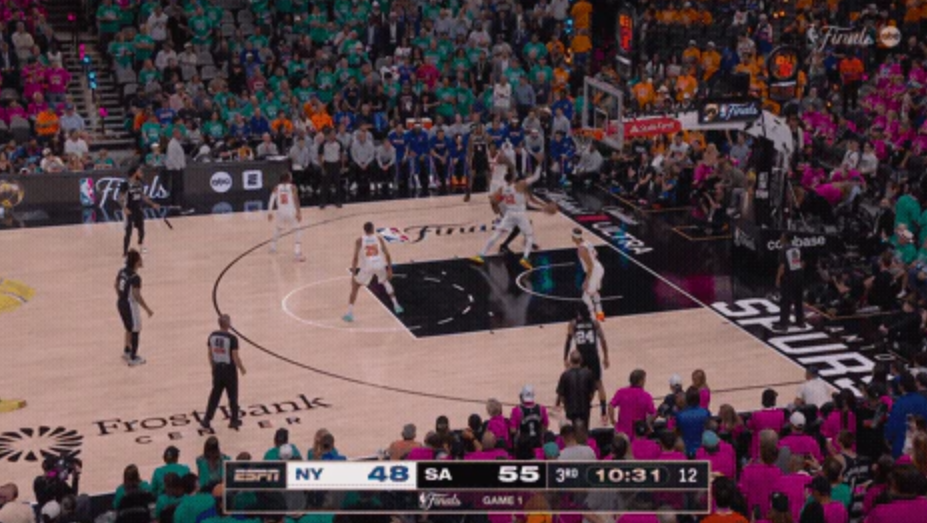
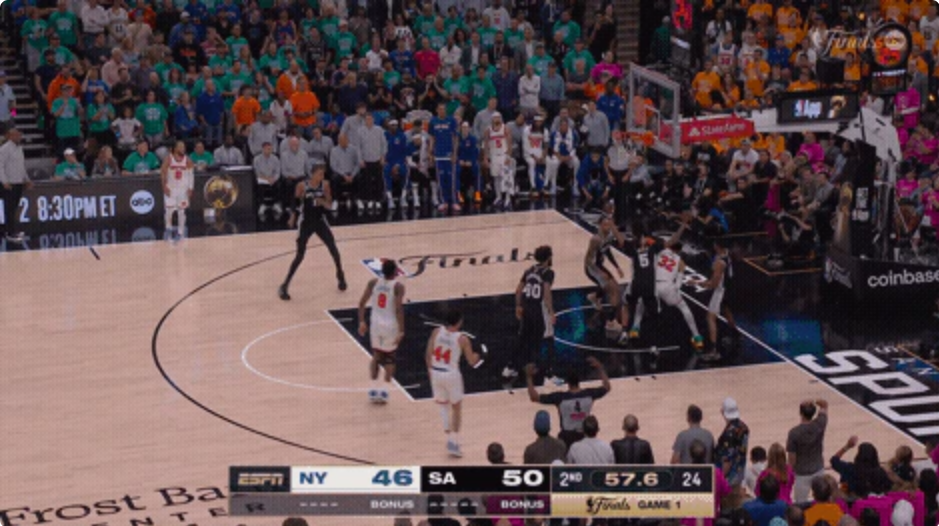
The New York Knicks defeated the San Antonio Spurs 105-95 in Game 1 of the NBA Finals.
WASHINGTON (AP) — President Donald Trump, a longtime New York Knicks fan, said he plans to attend an NBA Finals game at Madison Square Garden next week at the invitation of the team’s owner.
Describing himself as a “big fan” of the team and owner James Dolan, Trump said Thursday that he will be in the arena for at least one game next week. The NBA believes it would make him the first sitting president to attend an NBA Finals game.
“The answer is yes — he’s invited me, I’m going,” Trump said of Dolan’s invitation. Speaking to reporters in the Oval Office, Trump said he was eyeing Game 3 on Monday but didn’t rule out Game 4 on Wednesday. “Maybe I’ll do both.”
Trump, who is simultaneously contending with a war in Iran, strife in Congress and looming midterm elections, said he made sure to catch some of Game 1 on Wednesday as the Knicks beat the San Antonio Spurs and took a 1-0 lead in the series.
“I missed the middle because I talk to generals all night long now, but I watched that end of the game and they were dominant,” Trump said. “Really amazing.”
Asked about his plans for next week, Trump went on to offer his own game recap, giving nothing but praise for the Knicks. Taking questions after an event on his administration’s efforts to promote the U.S. coal industry, Trump said it “wasn’t looking good” for the Knicks early on but commended them for holding back Victor Wembanyama, the towering Spurs center.
“I say, how do you guard this guy? He’s 7-foot-5 and he’s got a great shot, right? But they find a way to do it. They’re really great.”
The NBA said it believes no other sitting president has attended an NBA Finals game. Earlier Thursday, Commissioner Adam Silver said some former presidents had attended. He recalled Trump as a Knicks fan long before his political career.
“Donald Trump, before he ever ran for office, he was a big Knicks fan,” Silver said. “I was there at many Knicks games with him in the old days. He attended many of our drafts when they used to take place at Madison Square Garden.”
Silver reiterated a message he conveyed Wednesday amid reports that Trump might attend — that sports can be unifying, even in deeply divided political times.
“We can emphasize what we have in common, not what pulls us apart,” Silver said. “We’re seeing that in New York and I think President Trump is very much a New Yorker, and I’m thrilled that yet another New Yorker wants to participate in the enthusiasm and the joy around this Knick team.”
The commissioner acknowledged that Trump’s presence will require extra security in and around Madison Square Garden. That would almost certainly mean longer transit times and logistical issues for fans.
“I think the fans are very understanding of that,” Silver said. “I think they recognize that it adds to the bigness of the event.”
The Knicks, meanwhile, will likely stick to late offense while the glass should continue to be a battleground for both teams.
Victor Wembanyama shot just 6-for-21 (29%) in Game 1, his third worst shooting performance of the season.
SAN ANTONIO — Both the New York Knicks and San Antonio Spurs probably think that they can play much better than they did in Game 1 of the NBA Finals.
The Knicks won, but it was their worst offensive game of the playoffs. For the Spurs, it was their third-worst offensive game of the entire season (102 games total). New York’s shot quality was relatively low, while San Antonio’s results (makes and misses).
It was an intense and exciting game, just the fifth Knicks game in these playoffs that was within five points in the last five minutes. But there’s a good chance that we won’t get anything nearly as clunky going forward.
Here are three things to watch in Game 2 on Friday (8:30 p.m. ET, ABC):
1. Wembanyama playing bigger
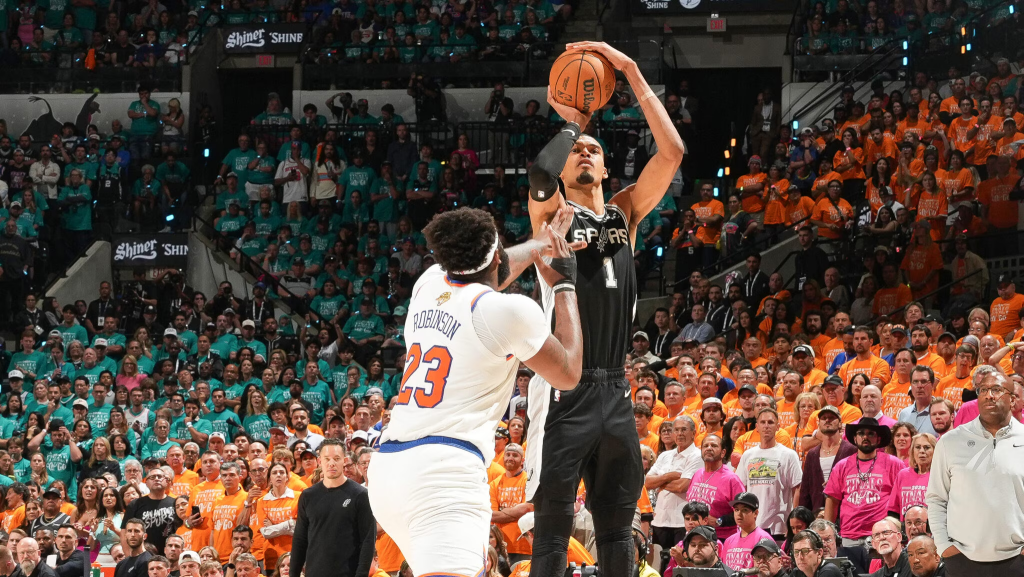
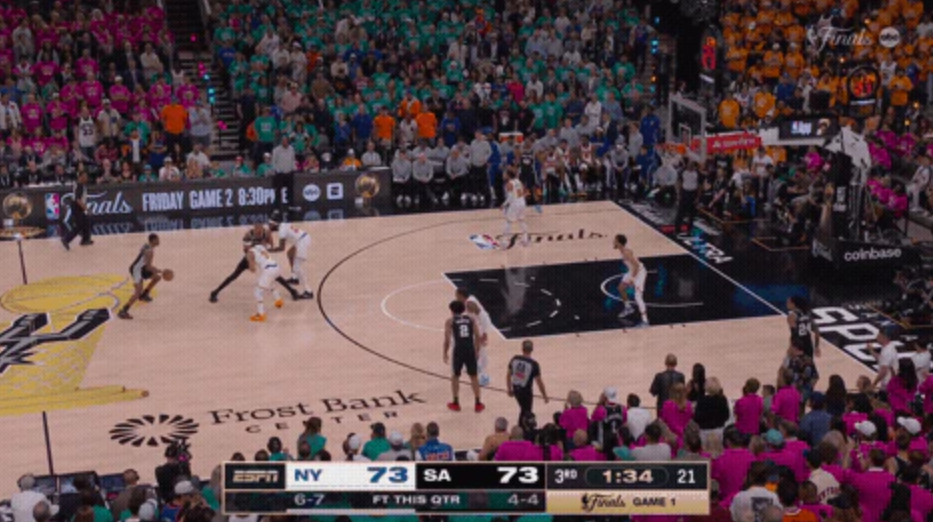
Victor Wembanyama shot just 6-for-21 (29%) in Game 1, his third-worst shooting performance (with a minimum of 15 shots) of the season. Only nine (43%) of those 21 shots came in the paint, down from 58% in the regular season. Most of those shots in the paint were well contested, and he made just four of the nine.
Getting Wembanyama easier shots near the rim is easier said than done, especially against a physical team like the Knicks that prioritizes rim protection over defending the perimeter. Pick-and-rolls aren’t going to lead to easy lobs, because weak-side defenders aren’t allowing him to go untouched as he rolls to the rim.
But they can lead to him establishing good post position as his defender recovers back …
Even if he gets bumped by another defender, he can still beat his man to the restricted area, plant himself near the basket and command the ball and/or a double-team. In Game 1, we also saw him just drift away from the basket when he had similar opportunities …
The Spurs need the 7-foot-4 guy to play big on both ends of the floor. And we should expect him to be more determined to do so in Game 2.
2. Knicks working late
The Knicks “want to play fast,” according to head coach Mike Brown. Almost always, early offense is better than late offense.
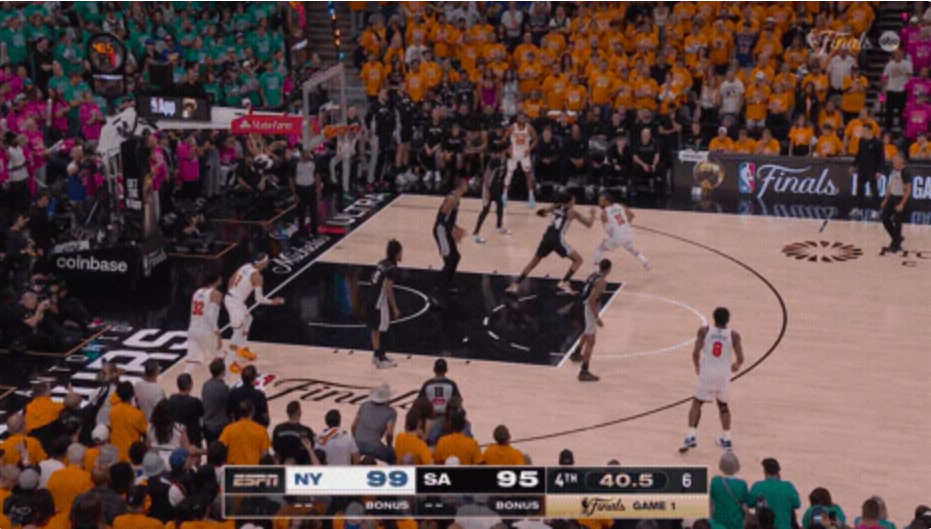
And in Game 1, there was a lot of late offense for the Knicks, who took 34 shots in the last seven seconds of the shot clock. That’s tied for the sixth-most field-goal attempts in the last seven seconds for any team in any game this season (regular season, Play-In and playoffs), and it included 12 of their 22 shots in the fourth quarter.
The Spurs took the lead when the Knicks went scoreless on six straight possessions in the fourth, with all six of those possessions ending with missed shots late in the clock. Overall, the Knicks shot 9-for-34 (26%), including 3-for-12 from 3-point range, in the last seven seconds of the clock on Wednesday.
Somehow, that was good enough. And Jalen Brunson put the game away with their final late-clock shot of the night, a ridiculous fadeaway against Devin Vassell in the final minute.
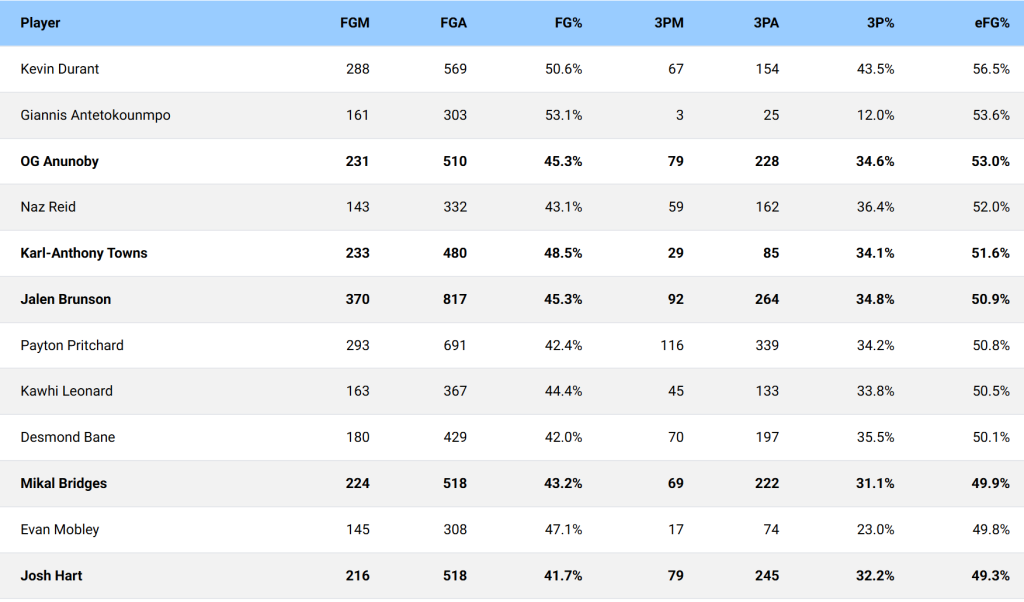
No team wants to be playing late in the clock as much as the Knicks did in Game 1. But no team is more comfortable working late than the Knicks. Among 67 players with at least 300 field-goal attempts in the last seven seconds of the shot clock over the last two seasons (regular season and playoffs), the Knicks’ five starters rank third, fifth, sixth, 10th and 12 in late-clock effective field-goal percentage.
Highest effective FG%, last 7 seconds of the shot clock, last 2 seasons
Includes regular season, Play-In and playoffs Minimum 300 FGA (67 players) eFG% = (FGM + (0.5 * 3PM)) / FGA
On the other end of the floor, only 12 of the Spurs’ 89 shots in Game 1 came in the last seven seconds of the shot clock. If anything, they don’t want to be in such a rush to shoot.
“I think for the most part just we didn’t make the extra pass as much as we usually do,” Stephon Castle said Thursday. “We kind of settled a lot more than we usually do. I think Coach preaches a lot — try and find better each possession, try and find the best shot.”
The Knicks have now played four games against the Spurs and three of those games account for three of the seven times that the Knicks have taken at least 29 shots in the last seven seconds of the clock.
So expect more late offense in Game 2 on Friday, when the Knicks’ ability to execute in the final few seconds of the shot clock could determine whether or not they head back to New York with a 2-0 lead.
3. Switching and the glass
The Spurs had more offensive rebounds (14) than the Knicks (10) in Game 1. But while all offensive rebounds lead to second chances, all second chances don’t come from offensive rebounds. (They also come from loose-ball fouls or rebounds than go out of bounds off the defense.) And second-chance points were 23-14 in favor of the Knicks.
The Spurs switched ball-screens pretty liberally on Wednesday, and that often led to mismatches for Karl-Anthony Towns.
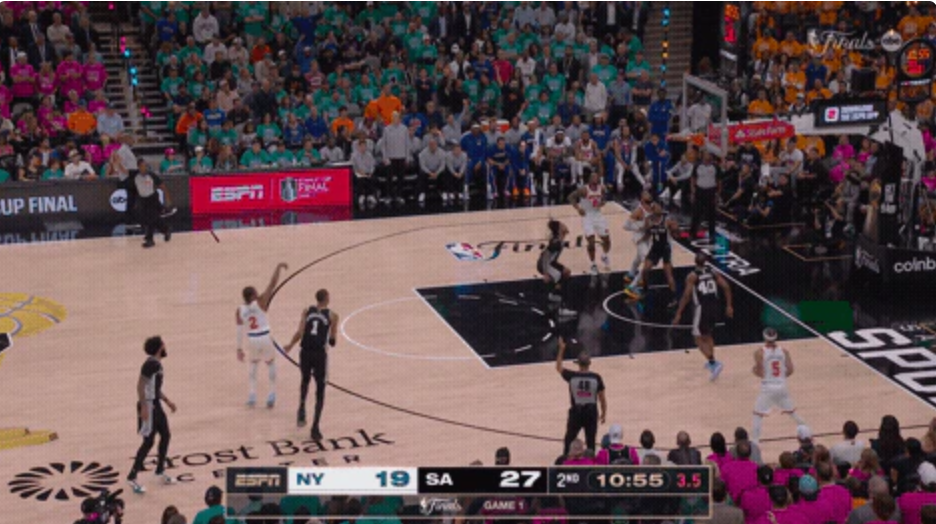
Early in the second quarter, Wembanyama switched a Towns screed for Jose Alvarado, leaving De’Aaron Fox on Towns. The Knicks’ big man took Fox into the paint and drew help, which led to a catch-and-shoot 3 for Miles McBride …
Late in the second, Wembanyama switched a Towns screen for Brunson and successfully defended the ensuing isolation (another late-clock shot). But Towns took Castle into the paint and drew a loose-ball foul, leading to two free throws …
The Spurs will continue to switch, and the switching is what can often lead to those late-clock situations, because the Knicks aren’t gaining early advantages.
“We’ve switched that ball screen with me on the ball all year,” Castle said. “It’s been successful for us.”
But the advantage could come after the initial shot, and the glass will continue to be a battleground throughout this series.
New York’s glue guy with relentless energy is willing to sacrifice personal achievement if it means success for the team.
Josh Hart speaks with Chris Haynes about the Game 1 victory over the San Antonio Spurs.
SAN ANTONIO — To say that Josh Hart posted one of the oddest stats lines in NBA Finals history in the 2026 series opener Wednesday does not do it justice.
Not when “oddest” – 3 points on 1-for-5 shooting with 15 rebounds, six assists and four steals – means “the sort of lines Hall of Famer Bill Russell used to put up when he was stacking rings for the great Boston Celtics.”
That was the comp, though, after Hart checked an unusual array of boxes to help the New York Knicks grab their 1-0 lead in the best-of-seven championship round.
Russell is considered one of the game’s greatest centers and leaders, not necessarily in that order, for the way he fit his talents alongside a bevy of elite teammates. Together they won 11 titles in 13 years, with Russell’s scoring often his least important input.
Five times Russell turned in Finals performances that were precursors of Hart’s (at least 15 rebounds and six assists, but fewer than 10 points). The Celtics won four. Overall, the bearded defensive specialist scored fewer than 10 points in 13 of his 70 Finals games and Boston went 10-3.
Hart’s work was reminiscent in its level of over-achievement for a 6-foot-5 guard (Russell was 6-foot-9 wrestling with many rivals taller and broader than him). His 15 boards were the most by a backcourt player in a Finals game at least since 1968, matching Kobe Bryant’s 15 in Game 7 in 2010 and the same number by Magic Johnson in a pair of 1980 games. And the last players to grab game highs in rebounds and assists in their Finals debuts were Shaquille O’Neal (1995) and Larry Bird (1981).
Lofty company.
“It doesn’t surprise me,” said Jalen Brunson, Hart’s teammate in New York and in college at Villanova. “I learned that that’s just who he is. I mean, he was our leading rebounder in college for I think my final two years, whatever, something like that.
“His energy is just relentless, it doesn’t stop. I mean, he eats candy all the time. That tells you who he is. He’s a big kid with an absurd amount of energy.”
Behind only Brunson and center Karl-Anthony Towns, Hart was the Knicks’ third star of Game 1. He guarded multiple Spurs players. He pushed the pace on offense to try to beat San Antonio from setting up defensively in the halfcourt.
David Fizdale and Chris Bosh point out how Josh Hart has been making a positive impact without scoring for the New York Knicks.
He also logged a couple of other notable numbers in the box score: Hart did his work in just 26:47 of court time, limited by foul trouble in the first half. And yet, he had the night’s most impressive plus/minus at plus-22 in those short minutes.
Said Brunson: “When he gets a little chip on his shoulder, when he gets mad, he finds a way to get every board.”
Some of Hart’s most intriguing work came in a matchup created for him when San Antonio stuck towering Victor Wembanyama on him defensively. In those moments, trying to shoot over or get past the Spurs’ 7-foot-4 center mattered less than just making the long fellow work. By moving, by changing direction and by pulling back, Hart could steal some of Wemby’s oomph and draw him away from the rim, where his length is such an asset in help defense.
As capable as Wembanyama is, the 22-year-old acknowledged that sometimes his marvelous versatility doesn’t come naturally. He can guard smallish players, in other words, but not without grinding through some gears.
Asked Thursday about such assignments, he said: “I guess to answer we could talk for half an hour with my coaching staff. For me guarding smaller players, it’s quickness of feet. It’s true that it is a little difficulty. Like, I’m still learning, but I’ve learned a lot to change the mindset between guarding the rim and guarding a small. I really need to flip a switch.”
That was music to Hart’s and the Knicks’ ears.
“When you have someone like Victor guarding you, obviously he’s very comfortable being around the rim and [blocking or altering shots],” Hart said. “So you want to do your best to draw him out.
“I’m able to play right action or handoffs or ball screens where JB [Brunson], Mikal [Bridges], OG [Anunoby], Landry [Shamet], if he’s down the floor, as long as I get a good hit on the guards, they’re going to have open shots.”
Duty such as that is how Hart has established his value to the Knicks. The glue guy willing to sacrifice had bounced through the Lakers, the Pelicans and the Trail Blazers after being drafted by Utah in 2017 as the 30th overall pick. He arrived in New York in a February 2023 trade and now – nine seasons, four teams, three trades and seven head coaches in – has become essential, just three victories away from a championship.
It doesn’t matter when opposing coaches try to hide a big man on Hart as his defender, daring the Knicks guard to launch his inconsistent outside shot. Hart finds seams in most games where he can make a difference.
“Yeah, you know what Josh is going to do,” Towns said. “He’s going to play hard. He’s going to be a dawg. He’s going to go out there and find a way to get the job done. He’s going to do it at a high energy level and with a lot of physicality and determination. You never want to tell Josh to not do something.”
Hart, the father of 3-year-old twin sons, is an avid golfer, a soccer enthusiast and a wine connoisseur. He and his wife Shannon feel they have found a home in New York, largely by keeping priorities in line.
“We’re in the NBA Finals – there’s millions of people watching,” Hart said Thursday. “It’s easy to get wrapped up in human nature of wanting to get recognition, wanting to score the ball, wanting to show people what you can do on the biggest stage.
“I know for me, that’s not really my assignment. It takes a little bit of time to find that humility. For me, I found that with prayer and my faith.”
“But when you have that willingness to sacrifice – and I think Jose [Alverado] has it, myself has it, a lot of guys on the team have it, OG at times, Mikal at times, KAT at times — that breeds a championship culture.”
SAN FRANCISCO, – Uber (UBER.N), has committed close to half a billion dollars in self-driving startup Nuro, two sources directly aware of the matter told Reuters, detailing the extent of a major investment by the ride-hailing company in developing commercial robotaxis.
After years of false starts, the robotaxi industry is re-accelerating development, testing and early commercial deployment, led by companies including Tesla (TSLA.O), Alphabet’s (GOOGL.O), Waymo and Amazon’s (AMZN.O), Zoox.
Uber has been positioning itself as a platform for the nascent industry and has partnered with many autonomous vehicle companies, including Chinese tech giant Baidu (9888.HK), U.S. electric vehicle maker Rivian (RIVN.O), and British startup Wayve. It also is working with Waymo in some U.S. cities.
One of Uber’s commitments is a three-way partnership with Nuro and electric vehicle company Lucid (LCID.O), to roll out 35,000 robotaxis, opens new tab using Lucid’s Gravity SUVs and upcoming midsize vehicles, Nuro’s technology and Uber’s platform.
The size and details of Uber’s financial commitment to Nuro have not been reported previously and reveal the full scale of the financial ties binding the firms.
Uber previously had reported investing $500 million in Lucid and planning a multi-hundred-million dollar investment in Nuro, including participating in a $203 million funding round for Nuro that valued the Silicon Valley startup at $6 billion.
Uber has since made an unreported follow-on investment in Nuro significantly larger than its first funding, both the sources said, declining to be named. Uber had also agreed to provide additional funding for Nuro once it hit certain development and commercial milestones, without disclosing terms. Together these commitments tally nearly $500 million.
The first few milestones have already been met on time, triggering the release of some funds from Uber.
The remaining money is tied to targets including testing without a driver, planned for later this year, carrying passengers in those driverless cars, expected by the end of this year, and ramping up the service next year, the source said.
Uber and Nuro declined to comment.
For Nuro, the funding provides crucial runway as it works to prove out its technology at commercial scale. The company initially made small delivery bots before pivoting in 2024 to licensing its self-driving software to carmakers and mobility companies.
The company is currently testing with safety drivers and the service is expected to launch in the San Francisco Bay Area later this year.
In April, the company received a California permit to test, opens new tab Gravity autonomous vehicles without a safety driver in some counties and in May was cleared to carry passengers, opens new tab in testing with drivers.
Nuro is also backed by investors including Nvidia (NVDA.O),tab and SoftBank (9984.T)
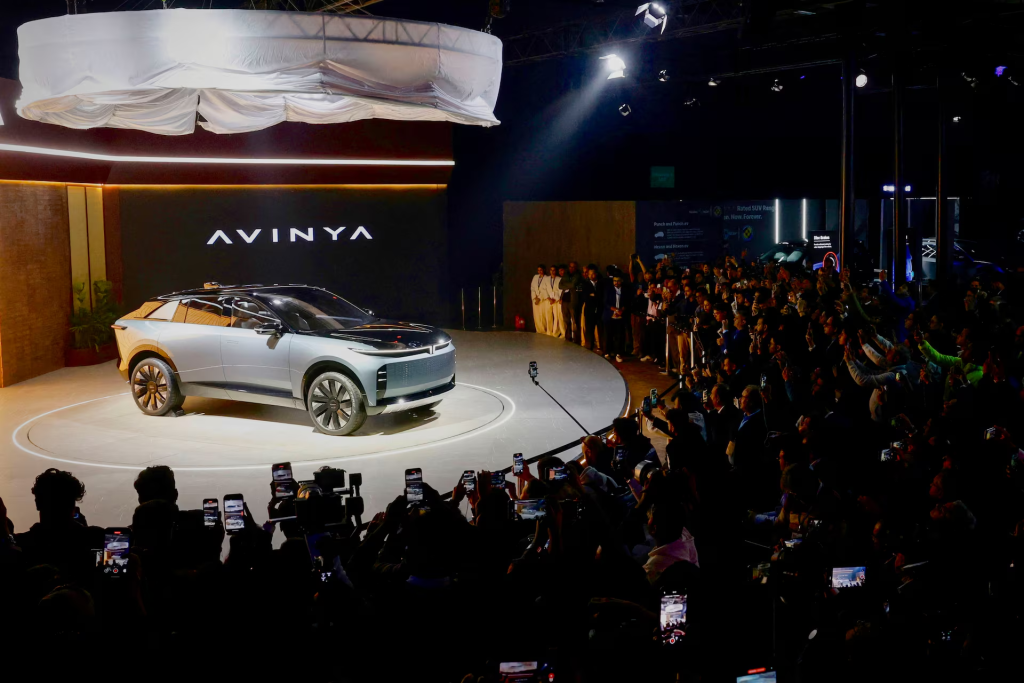
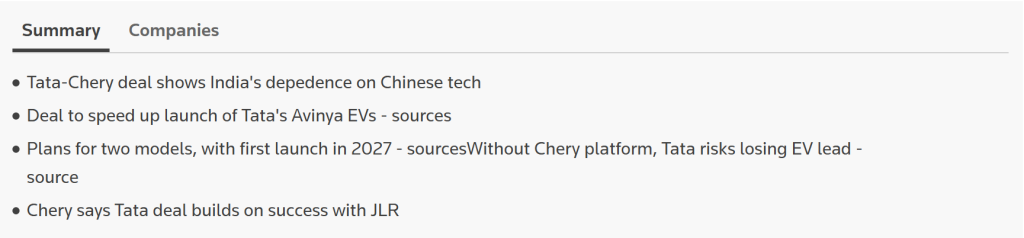
NEW DELHI, – Tata Motors will use an automaking platform from Chery to locally build electric cars under its premium Avinya brand, underscoring the dependence on Chinese technology after its original plan with Jaguar Land Rover was shelved.
Reuters first reported that Tata (TAMO.NS), will use Chery’s (9973.HK), platform to launch its Avinya EV, as India’s biggest electric carmaker seeks to get its long-delayed programme back on track and maintain its pole position.
Tata told Reuters in a statement it will leverage the Freelander platform produced in a joint venture between Chery and Jaguar Land Rover in China, with the cars being manufactured at its newly opened factory in Tamil Nadu in southern India.
While Chinese carmakers remain largely shut out of the world’s third-largest auto market, their technology is quietly becoming hard to avoid, as local manufacturers lean on it to stay competitive in the global EV race
The first Avinya model on Chery’s platform is due in 2027 and will be shipped from China as a kit and assembled in India, two people familiar with the matter said, with efforts to source localised components already underway. A second EV is due for launch in 2029, with scope for two more vehicles beyond that, one of them said.
The strategy marks a pivot from Tata’s original plan to use JLR’s electrified modular architecture (EMA) for Avinya models targeted for 2025. That roadmap collapsed last year when JLR shelved plans to build EMA-based EVs in India, forcing Tata into a reset, Reuters previously reported.
Chery’s platform deal is expected to make up for the lost time, granting Tata access to advanced features and technology it would otherwise take longer and more capital to develop, the people said.
“Avinya is being developed as a global premium brand. Our collaboration with JLR and its partners will be an important pillar,” Tata said.
Chery told Reuters in a statement that its agreement with Tata builds on the success of its collaboration with JLR.
“Chery will act as a supplier to Tata Motors Passenger Vehicles. Each project operates under its own separate agreement with standard commercial terms,” the Chinese carmaker said.
JLR in 2024 tapped Chery, a longtime partner, to develop and build electrified cars, including EVs and hybrids, under its resurrected Freelander brand. The cars will be based on the Chinese company’s architecture and built at its factory in Changshu.
The deal with Chery is a “stopgap arrangement” because without fresh products, Tata risks losing its EV lead, one of the people said, adding the company still intends to develop its own dedicated platform over time.
All of the people declined to be identified because they are not authorised to speak to the media.
INDIAN COMPANIES LEAN ON CHINESE TECH
Electric models make up 14% of Tata’s total sales with a target to more than double that to 30% by 2030. But rivals Mahindra & Mahindra (MAHM.NS), and JSW MG Motor are closing in on its lead, exposing gaps in its EV line-up and raising the risk of further market share losses.
The deal talks reflect a broader shift underway in India’s automotive industry. India’s automakers are increasingly importing China’s EV technology while avoiding deeper equity partnerships due to political sensitivities.
Since 2020, New Delhi has placed strict curbs on investment from neighbouring nations mainly targeted at China, effectively freezing large-scale participation in the auto industry. While restrictions have eased slightly in sectors like electronics, carmakers still face high barriers.
JSW Motor, the independent car making venture of steel-to-cement billionaire Sajjan Jindal, also has a similar platform licensing deal with Chery.
Indian car companies have increased their spending on research and development of new technologies and powertrains in recent years, but like many global peers they are unable to match China’s speed, cost and tech prowess in EVs.
Chery, China’s largest car exporter, has rapidly expanded its global footprint.
Drawing inspiration from Toyota and Tesla, the Chinese automaker has pursued joint manufacturing arrangements with foreign companies across key markets, including Europe, Southeast Asia and Latin America.
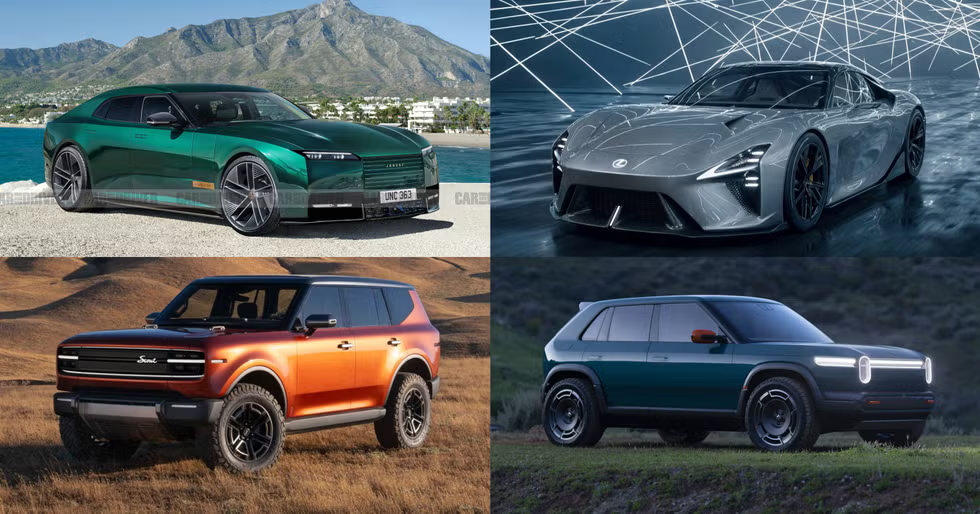
Our sneak peek at the most promising cars, trucks, and SUVs of the next few years.
Even in the age of next-day delivery, self-checkout, and gigabit internet, some things can’t be rushed. The cars, trucks, and SUVs seen here won’t reach dealer lots for anywhere from a few months to a few years. Some of them are about to roll down the assembly line. Others haven’t emerged from the design studio yet. We’re telling you about them now, though, because these are the vehicles that will matter, regardless of how many boring crossovers automakers puke out. These are worth the wait.
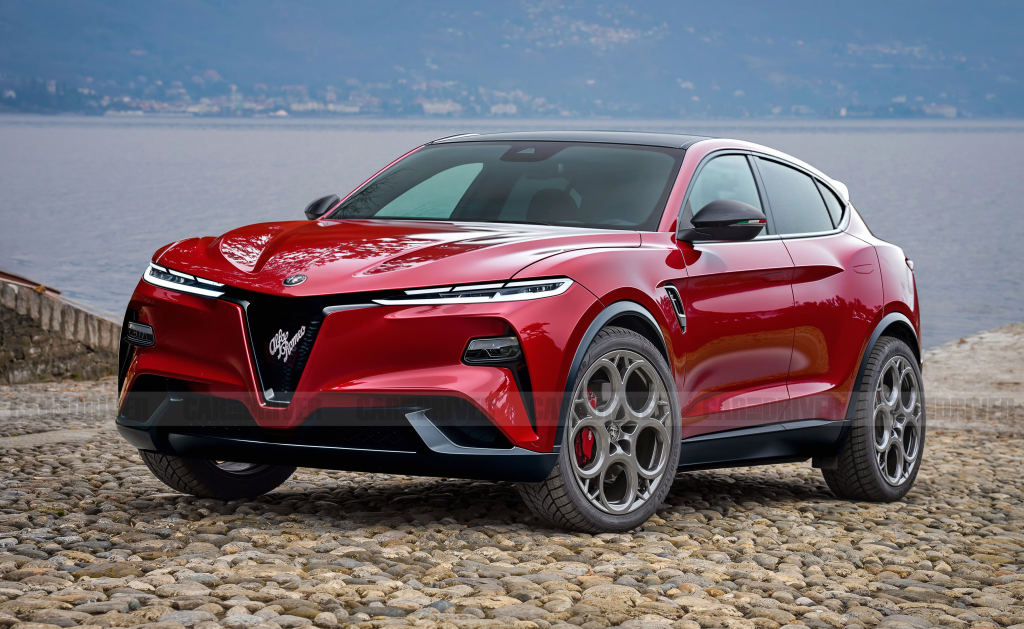
2027 Alfa Romeo Stelvio
2027 Alfa Romeo Stelvio Is a Svelte SUV Worth Waiting For
The second-generation Stelvio arrives next year with Alfa Romeo’s typically beautiful styling and the choice of a hybrid or an electric powertrain.
The Alfa Romeo Stelvio is being thoroughly rethought for its second generation, which was supposed to arrive in 2026 but has now been delayed until 2027 at the earliest. While it will still sport Alfa Romeo’s typically sensual styling, the SUV will now be sold with a choice of either a hybrid or a fully electric powertrain. The Stelvio will also migrate to the STLA Large platform, which could push the compact SUV closer to mid-size territory. A future performance-oriented Quadrifoglio variant could make use of the Hurricane twin-turbocharged inline-six that is also due to appear in its platform-mate, the Dodge Charger.
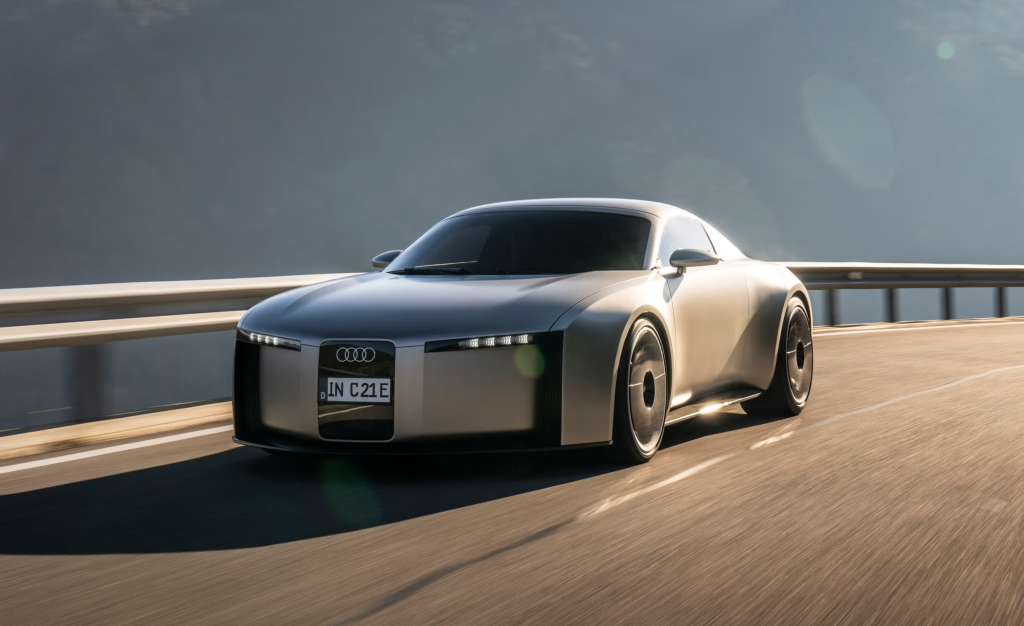
Audi is planning a new electric sports car based on the radical Concept C. Positioned somewhere between the now-dead TT and R8 sports cars, the Concept C will usher in a new design language for the brand, with bold lighting, clean surfacing, and an interior centered around high-quality materials. The Audi will share its platform with the upcoming Porsche 718 EVs, and the electric sports car will likely launch with both a rear-wheel-drive single-motor setup and an all-wheel-drive dual-motor powertrain. We’re expecting the TT successor to arrive at some point in 2027 with a price approaching $100,000.
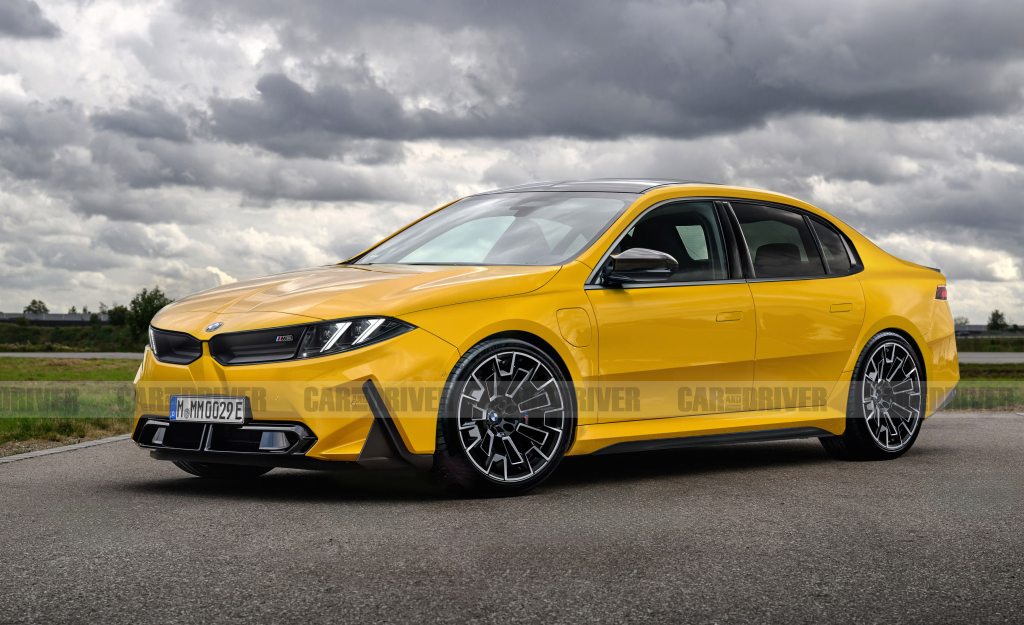
2027 BMW iM3
BMW’s venerable 3-series sports sedan is now complemented by an electric variant called the i3, which rides on the same new 800-volt architecture as the iX3 SUV. The i3 will also spawn the first proper electric M car, with the iM3 expected to pack a potent quad-motor powertrain. The i3 goes on sale in the U.S. at the end of 2026, and we expect the iM3 to follow in 2027.
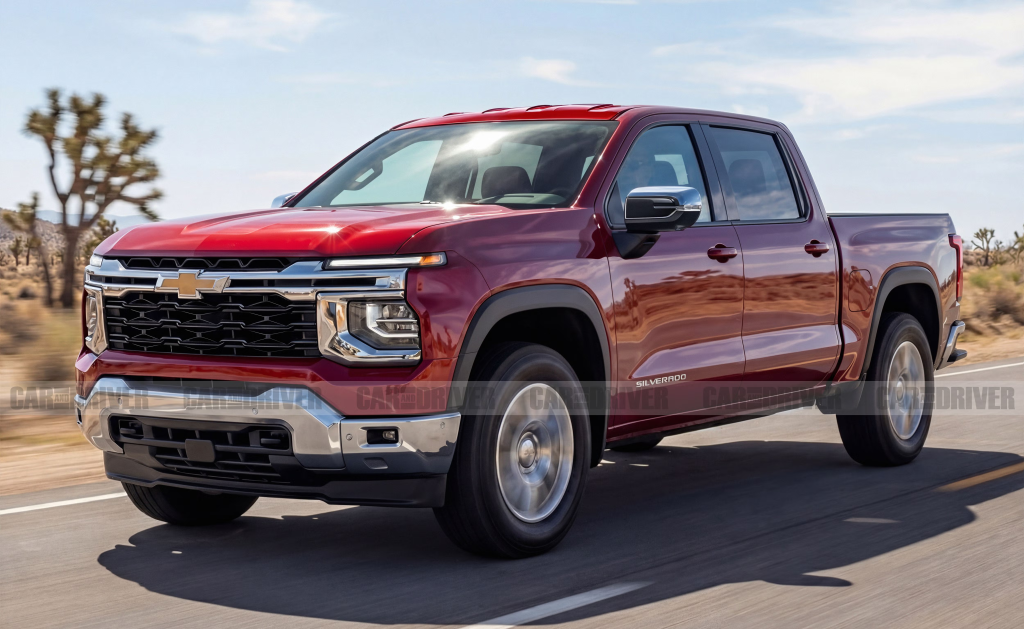
2027 Chevrolet Silverado
Pickup trucks are big business in the United States, and Chevy is gearing up to overhaul its moneymaker for 2027. The next-generation Silverado will go on sale by the end of this year with reworked styling that doesn’t stray far from the current generation’s assertive look. The big changes will be under the skin, where an updated version of the current turbocharged four-cylinder will be joined by a new small-block V-8, likely measuring 5.7 liters and making more power than the current 5.3-liter’s 355 ponies. Rumors also suggest 6 percent better fuel economy from the new eight-cylinder engine. We expect Duramax diesel six-cylinder to carry over as well, and the Silverado should continue to start at around $40,000 for the base WT trim.
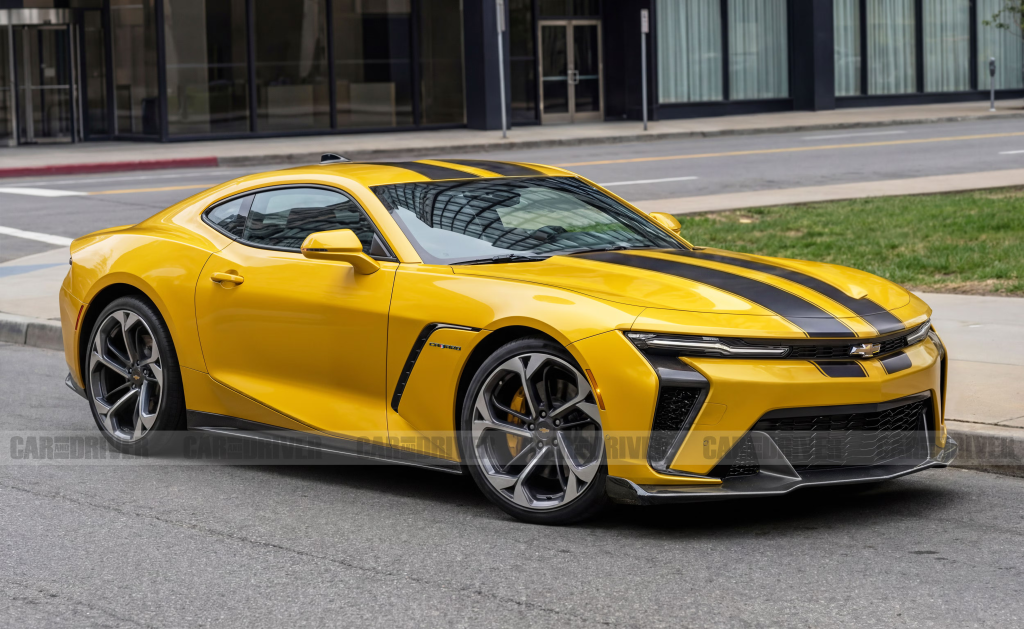
2029 Chevrolet Camaro
The Chevy Camaro is set to make a triumphant return for the 2029 model year. The iconic pony car will likely return with two doors, but there’s a strong chance that Chevy offers it in a four-door configuration too, since it will share a platform with new sedans from Buick and Cadillac. A turbocharged four-cylinder engine will likely be the base powertrain, while the Camaro is also expected to borrow the new 535-hp 6.7-liter V-8 from the Corvette. A 10-speed automatic will hopefully be joined by a six-speed manual. Production is expected to kick off in late 2028, and the starting price will probably start around $40,000.
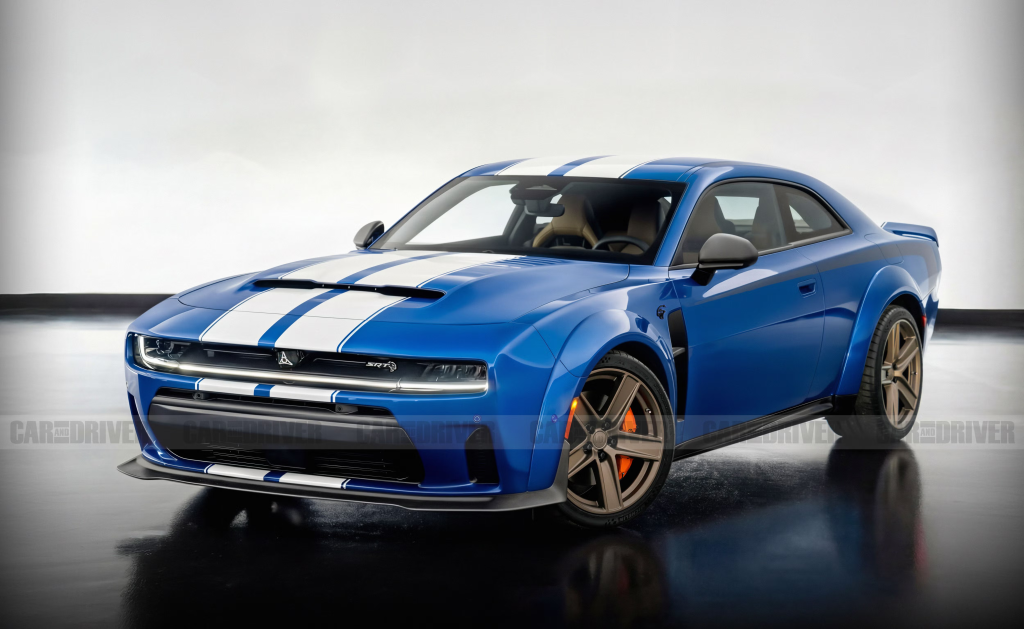
2027 Dodge Charger Hellcat V-8
Just as the Hemi V-8 returned to the Ram 1500 pickup truck, so too will the eight-cylinder squeeze its way back under the hood of the Dodge Charger. The electric Charger Daytona has failed to catch on, and the return of the V-8 should help the muscle car regain the adoration of the Dodge fanbase. The V-8 will likely be reintroduced in 5.7-liter, 6.4-liter, and Hellcat-badged supercharged 6.2-liter form, and power outputs should remain mostly the same, with the Hellcat easily topping 700 ponies. Look for the Hemi V-8 to reappear in the Charger sometime in 2026.
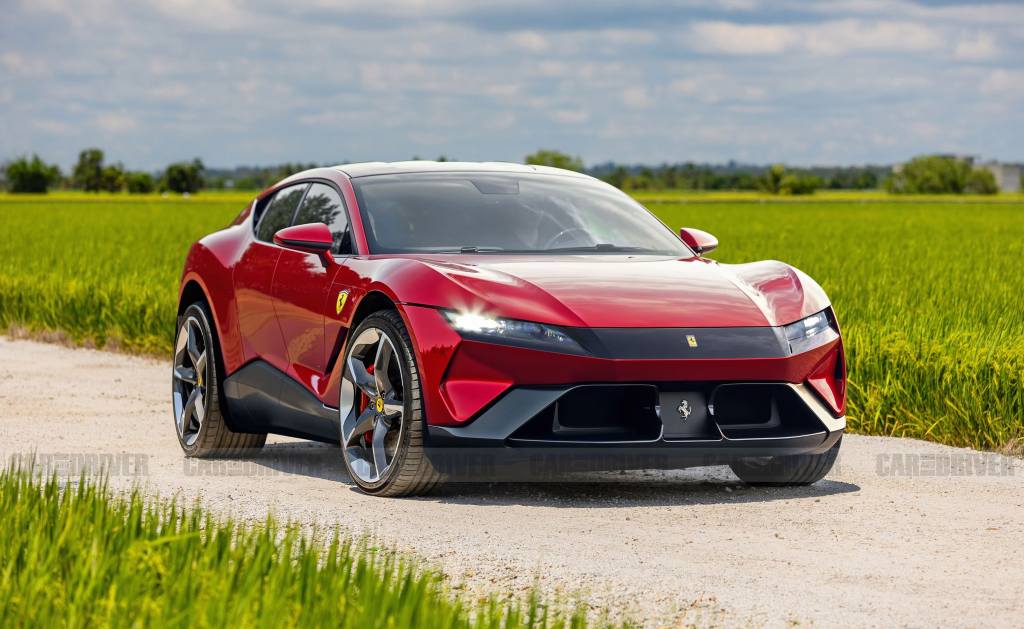
2027 Ferrari Luce EV
The Ferrari Luce marks the start of a new era for the famous Italian automaker, which will sell its famed V-12 engines for as long as it can, but has decided to also cater to a different crowd with an electric high-performance SUV. The low-slung crossover will be able to seat at least four and Ferrari plans to develop the entire powertrain in-house, including the high-voltage battery and motors. The Ferrari Luce EV will likely start at more than $500,000, and the Prancing Horse marque should reveal the car in early 2026.
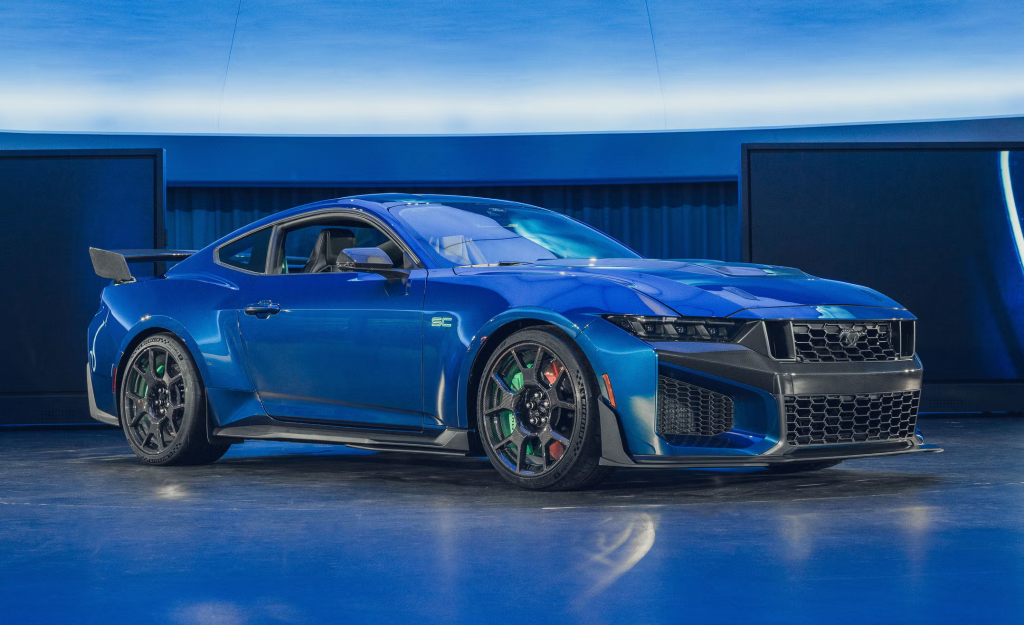
2026 Ford Mustang Dark Horse SC
The Ford Mustang Dark Horse SC arrives as a successor to the Shelby GT500, sitting between the standard 500-hp Dark Horse and the track-focused GTD. This high-powered bruiser packs a supercharged 5.2-liter V-8, the same engine as the GTD. Ford has yet to reveal power figures, but we expect to have close to 800 hp. Ford also honed the suspension for track use and upgraded the aerodynamics for more downforce. Deliveries of the Dark Horse SC kick off this summer.
2027 Ford Mustang Raptor
Porsche created an off-road Dakar version of the 911 and Lamborghini turned the Huracan into a lifted supercar called the Sterrato. So why can’t Ford apply its Raptor off-road treatment to the Mustang? It may sound crazy, but we hear it’ll offer a naturally aspirated V-8 engine, all-wheel drive, and a lifted suspension with Fox Live Valve dampers. This limited-run, bizarre spin on the Mustang could arrive in 2027 with a starting price of around $90,000.
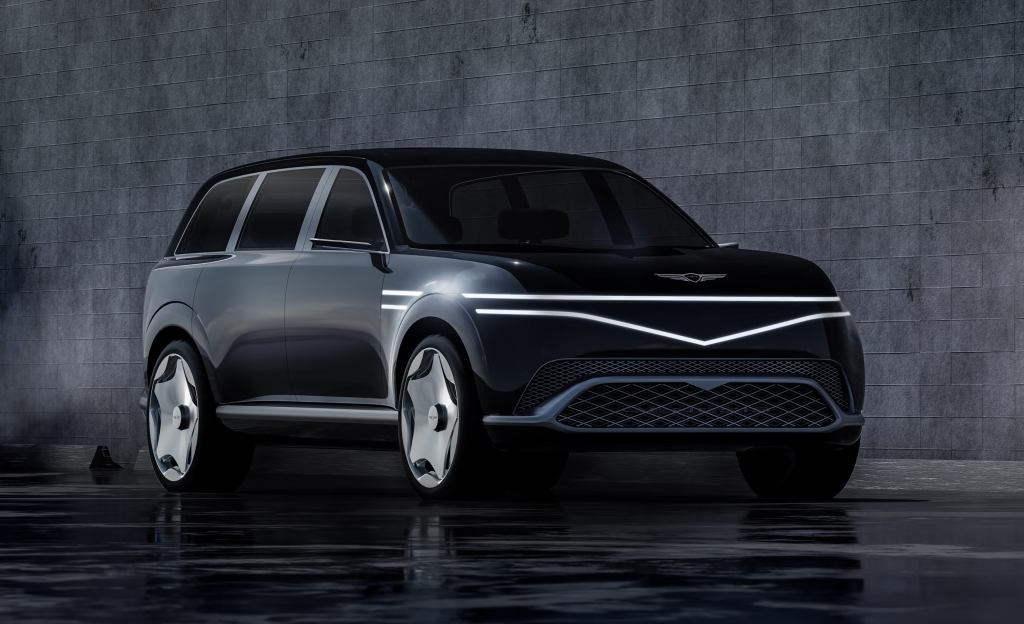
2027 Genesis GV90
Sure, Genesis already has a flagship sedan, but no self-respecting luxury brand can do without a top-dog crossover these days. Enter the upcoming GV90, which will be a large three-row electric SUV with all the presence and size you expect from a range-topping model. We’re not sure about specs yet, but expect it to have standard all-wheel drive, a range of around 250 miles, and a similarly posh interior as the G90 sedan when it arrives with a six-figure price sometime next year. The 2024 Neolun concept hinted at the upcoming SUV’s opulent design.
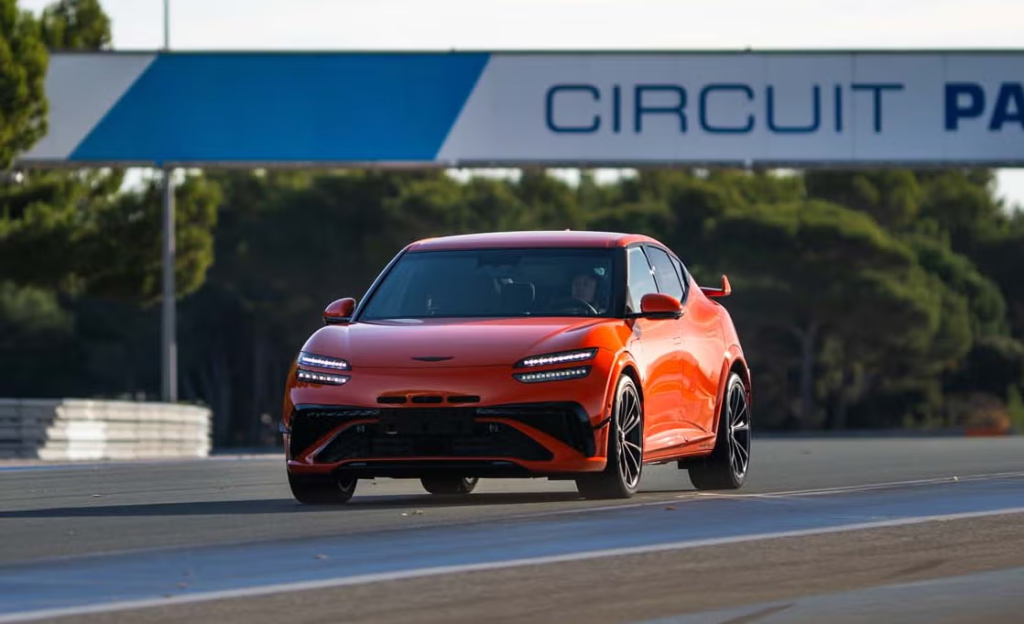
2027 Genesis GV60 Magma
The Hyundai Ioniq 5 N is one of the most exhilarating EVs on sale, and Hyundai’s luxury brand, Genesis, is launching its own version of the high-performance electric SUV in the form of the GV60 Magma. The aggressive-looking crossover is the first model under the new Magma subbrand, and the GV60 Magma mirrors the Ioniq 5 N with 601 horsepower and a boost function that ups output to 641 ponies. The Genesis, however, produces more torque when the boost mode is activated at 583 pound-feet, and takes Ioniq 5 N’s simulated gearshifts to the extreme by adjusting motor output depending on the gear. The fake exhaust noises are also present, and the 4938-pound GV60 Magma also receives a retuned suspension and better brakes. Sales start in the U.S. in 2026.
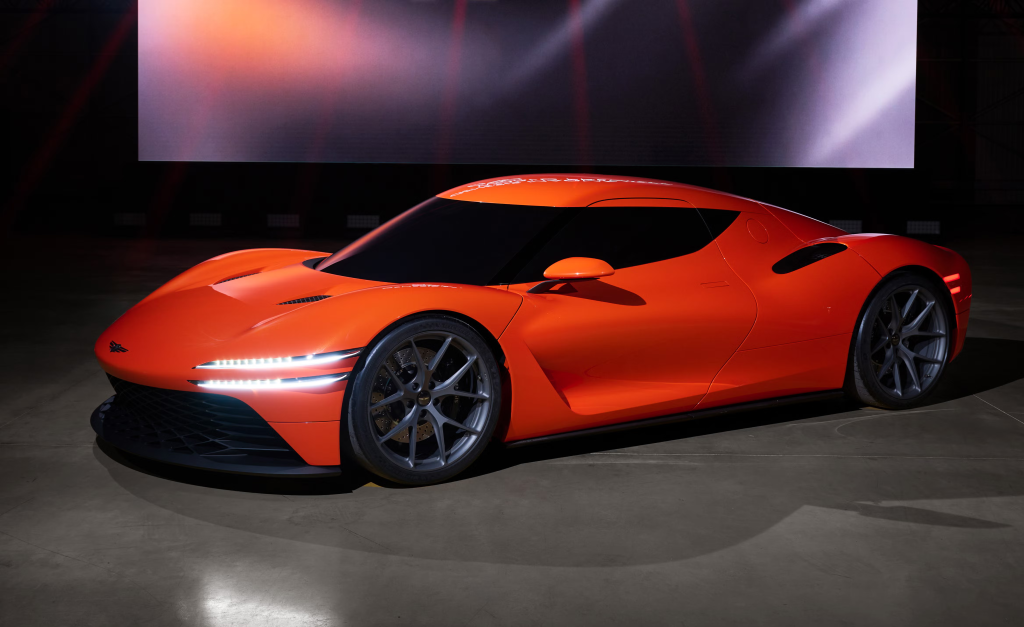
2028 Genesis Magma GT
Genesis wants to prove it can do performance as well as luxury, and the electric GV60 Magma will be followed up by the Magma GT. Instead of electric motors, however, the slinky coupe will pack a mid-mounted twin-turbocharged V-8 engine that should produce well over 600 hp. The V-8 could also be joined by a V-6 hybrid powertrain, and the Magma GT will spawn a convertible model as well as a hardcore track-focused trim. Genesis plans to take the Magma GT racing, and production should start by late 2027.
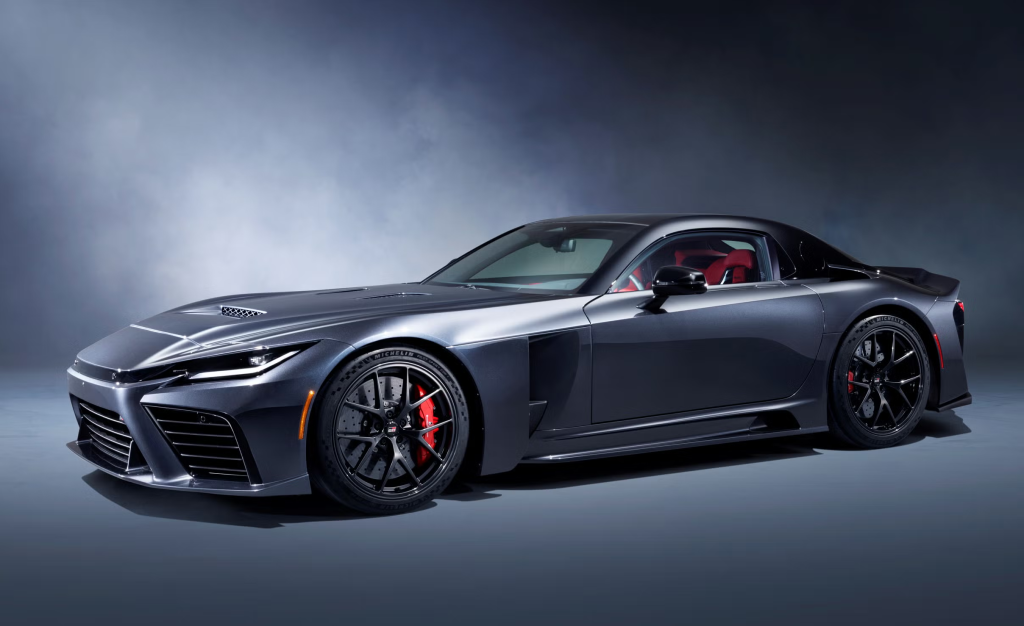
2027 GR GT
Originally expected to wear a Lexus badge, the Toyota-developed supercar will actually arrive as the first standalone model under the GR performance brand. Called the GR GT, the aggressive bodywork is wrapped around a new aluminum structure. The engine bay packs a twin-turbocharged 4.0-liter V-8, hooked up to a mechanical limited-slip differential and an eight-speed transaxle, the latter of which also houses an electric motor. All told, the hybrid powertrain churns out 641 hp and 627 pound-feet of torque, providing a claimed top speed of 199 mph. Toyota says the curb weight is 3858 pounds. Prices are expected to start at around $300,000, and sales should start in late 2027.
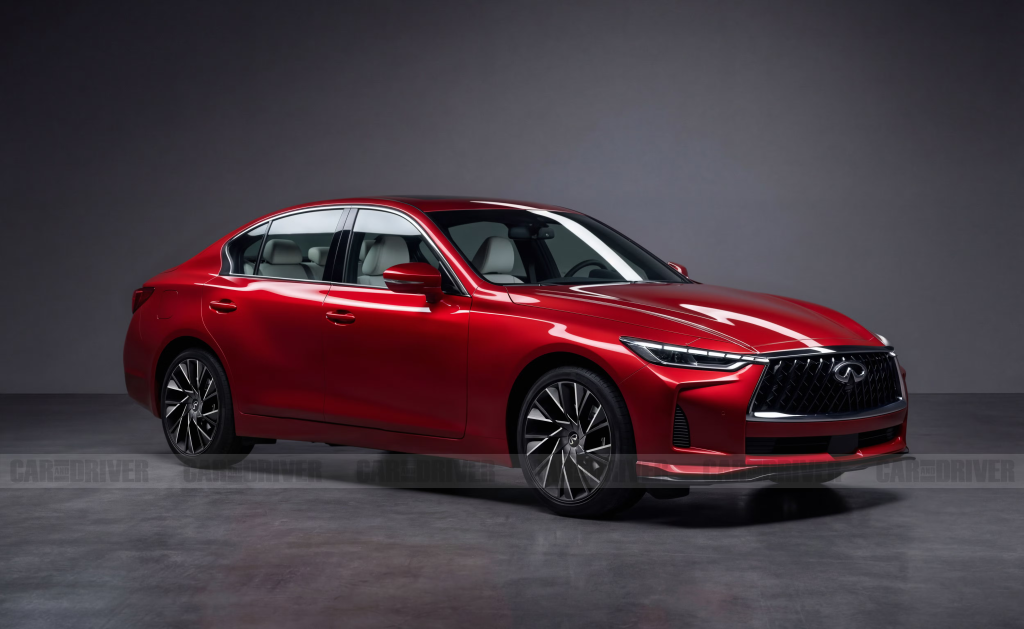
2028 Infiniti Q50
Infiniti is going back to its roots with a new Q50 sports sedan for 2028. Playing off the popularity among enthusiasts of the G35 coupe of the early 2000s, the revived Q50 sedan will pack a twin-turbocharged V-6 engine borrowed from the Nissan Z and producing at least 400 horsepower. Better yet, Infiniti is strongly considering a manual transmission to make the Q50 even more engaging. The Q50 should return in 2027, and pricing should start at around $60,000.
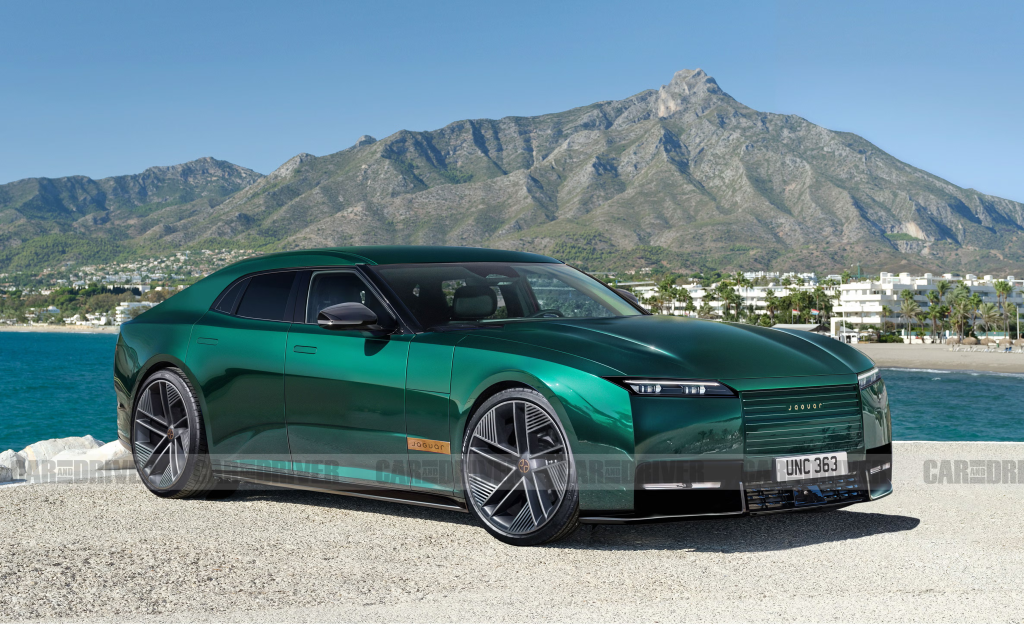
2027 Jaguar Type 01
Jaguar has thrown out the playbook and will start afresh in late 2026 when production of the Type 01 gets underway. The large, four-door grand tourer will be the first model in a line of new EVs as Jaguar attempts to move upmarket to compete with the likes of Bentley. The Type 01 will be boldly styled, taking its blocky front end and dramatic proportions from the Type 00 concept. Jaguar is also targeting a 430-mile range for its new EV, which will produce over 986 horsepower from a tri-motor powertrain. We expect pricing to start at around $130,000 as Jaguar aims to capture a wealthier, younger audience.
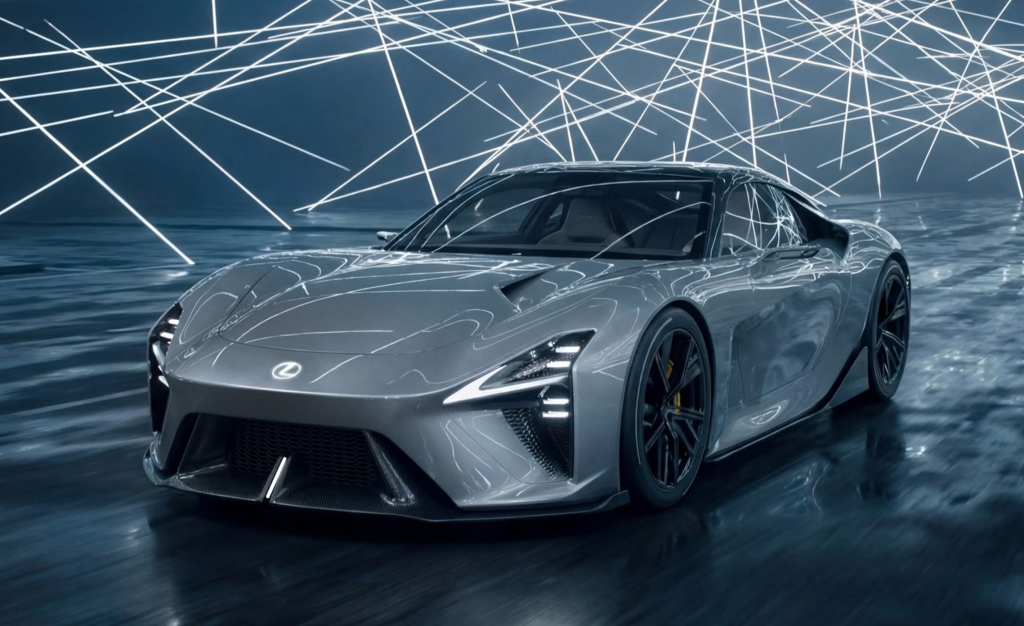
2029 Lexus LFA
Lexus signaled its interest in a high-performance EV with the Electrified Sport concept in 2021, and doubled down with the LFA concept in 2025. The concept utilizes the same aluminum platform as the hybrid GR GT, but with an unspecified electric powertrain. Lexus had said the Electrified Sport would be capable of a 60 mph sprint in the low 2.0-second range and a range of over 430 miles thanks to solid-state batteries, but those figures could change by the time the new LFA launches in a few years. Lexus has also hinted at a simulated manual transmission in the past, which could help differentiate the LFA EV.
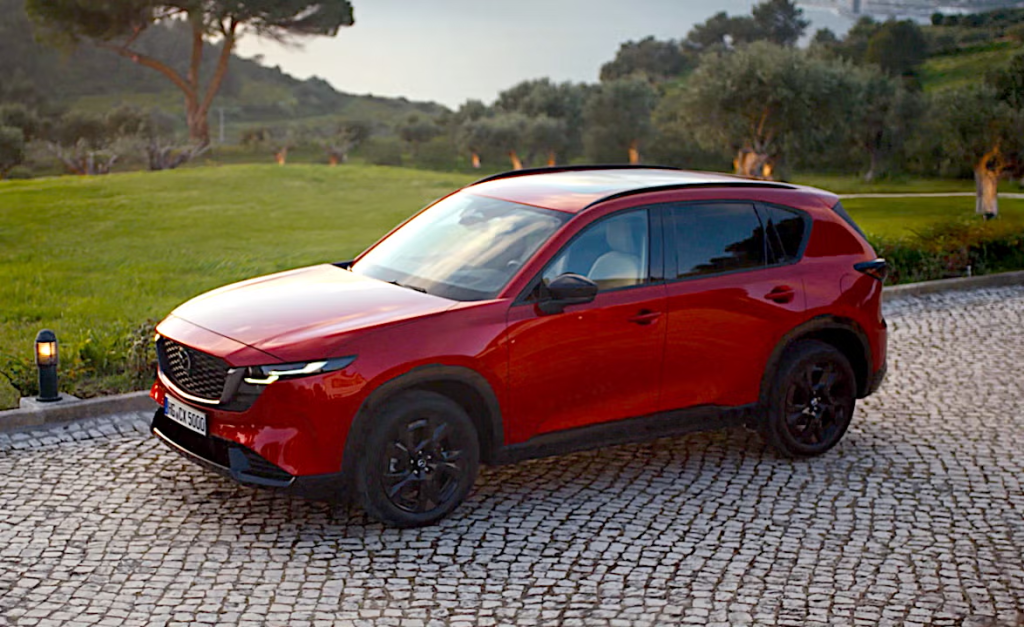
2027 Mazda CX-5 Hybrid
The Mazda CX-5 is the brand’s bestselling model and will get a boost with the addition of a hybrid powertrain in 2027. Mazda already revealed the design of the new generation for the nonhybrid model, and it shares a similarly slick look to the outgoing CX-5. The standard 187-hp four-cylinder engine will be joined by a Mazda-developed hybrid powertrain for the 2027 model year, which is expected to make use of Mazda’s 2.5-liter inline-four engine and should push the EPA-rated fuel economy over the 30-mpg mark.
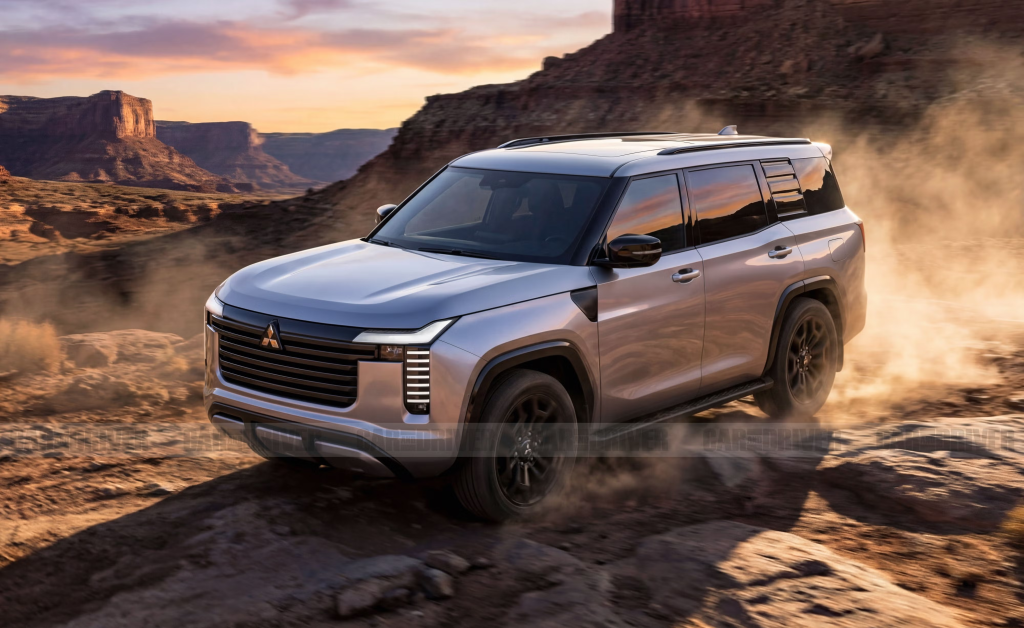
2028 Mitsubishi Montero
The revived SUV will sit above the Outlander in the Japanese automaker’s lineup and will ride on a body-on-frame platform borrowed from Nissan. The Montero is expected to employ a twin-turbocharged V-6, but may also offer a plug-in hybrid powertrain. Prices should start in the low-$60,000 range, and sales should start at some point in 2027.
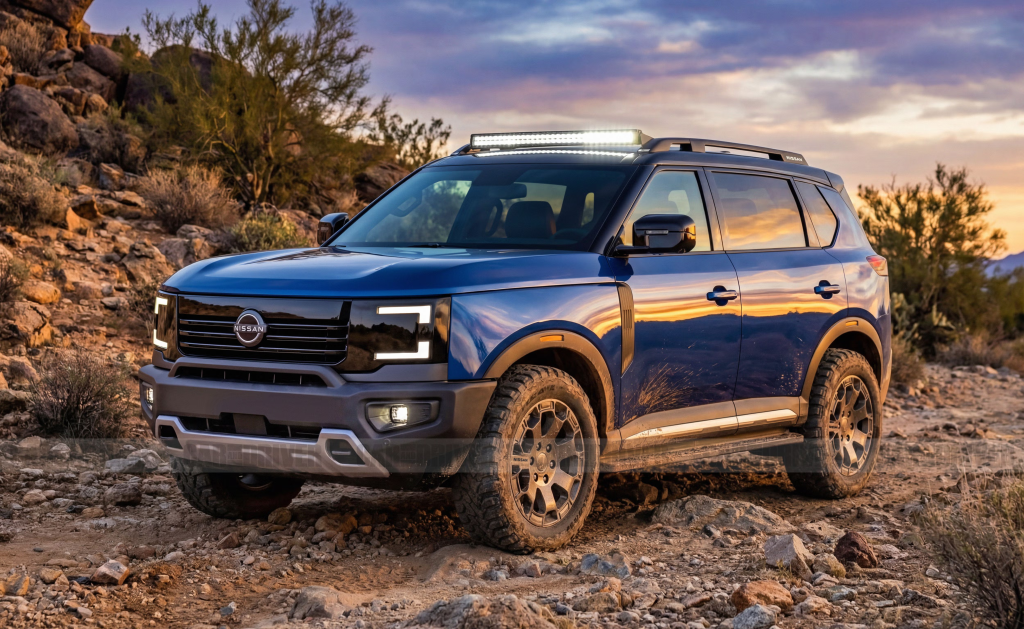
2028 Nissan Xterra
Nissan is reviving the Xterra nameplate for a new off-road-focused SUV. Due out in 2028, the new Xterra will feature boxy bodywork and a body-on-frame platform for true all-terrain chops. The four-wheel-drive system is expected to be hooked up to a V-6 hybrid powertrain. Nissan is targeting a price point of around $40,000 for its new off-roader.
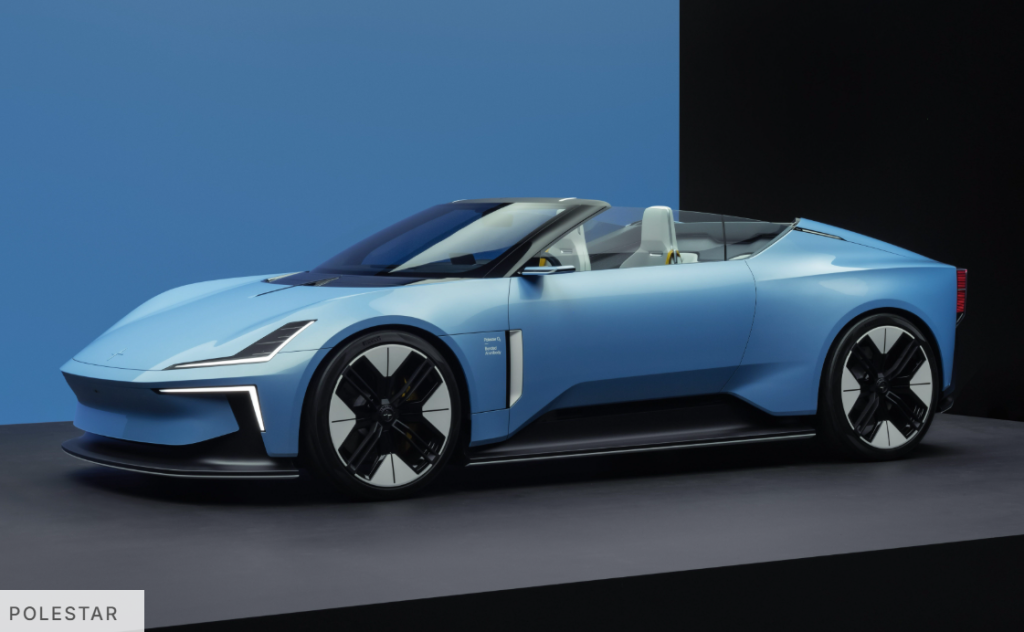
2030 Polestar 6
Polestar’s first vehicle, the dashing 1 hybrid coupe, has been followed by a succession of more reasonable cars, but the Swedish automaker will move back upmarket with the Polestar 6 convertible. Based on the O2 concept, the 6 will pair crisp styling with an 884-hp, 663-lb-ft all-wheel-drive powertrain, good enough for a 3.2-second sprint to 60 mph and a 155-mph top speed. Its bonded aluminum chassis and 800-volt architecture will be shared with the upcoming Polestar 5 sedan. Originally expected in 2028, Polestar is now prioritizing a small SUV called the 7, with the 6 now not expected to reach dealerships until 2030 at the earliest.
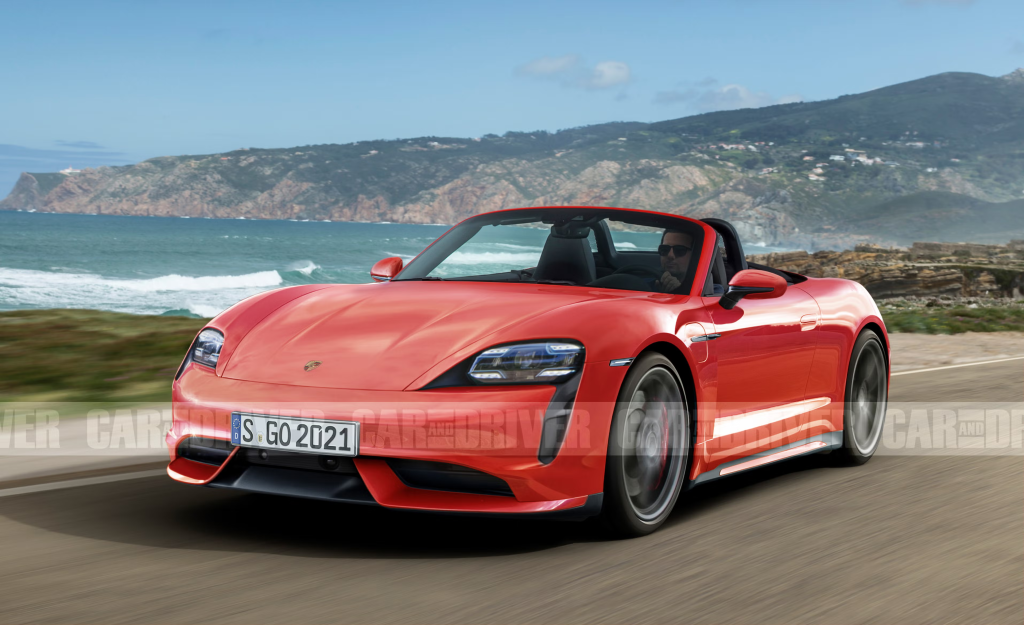
2027 Porsche 718 Boxster and Cayman EV
So far, Porsche’s electric lineup includes the Taycan sedan and Macan EV SUV, but the brand’s sports cars will begin to transition to battery power soon. The first entry will be the EV version of the 718 Boxster and Cayman mid-engine models due in 2027. We’re eagerly anticipating these cars because Porsche is promising lots of horsepower, the same balanced chassis as the gas versions, and even a dynamic soundtrack of some sort.
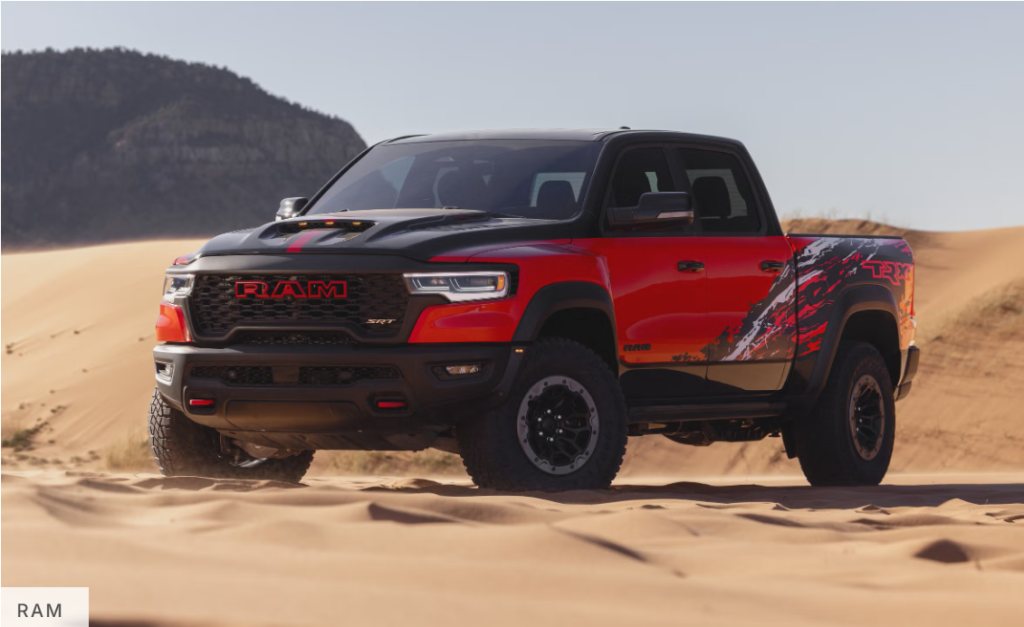
2027 Ram 1500 SRT TRX
The V-8 lives again! After reintroducing the Hemi to the Ram 1500 pickup for 2026, the American truck brand continues its eight-cylinder push by reviving the TRX. Ram already created a beefed-up body-on-frame chassis for the six-cylinder RHO, and now drops the supercharged 6.2-liter Hellcat V-8 back into the truck, upgrading the engine to 777 horsepower and 680 pound-feet of torque. Ram claims the truck will blast to 60 mph in just 3.5 seconds. Prices start at $102,590, and sales kick off in the second half of 2026.
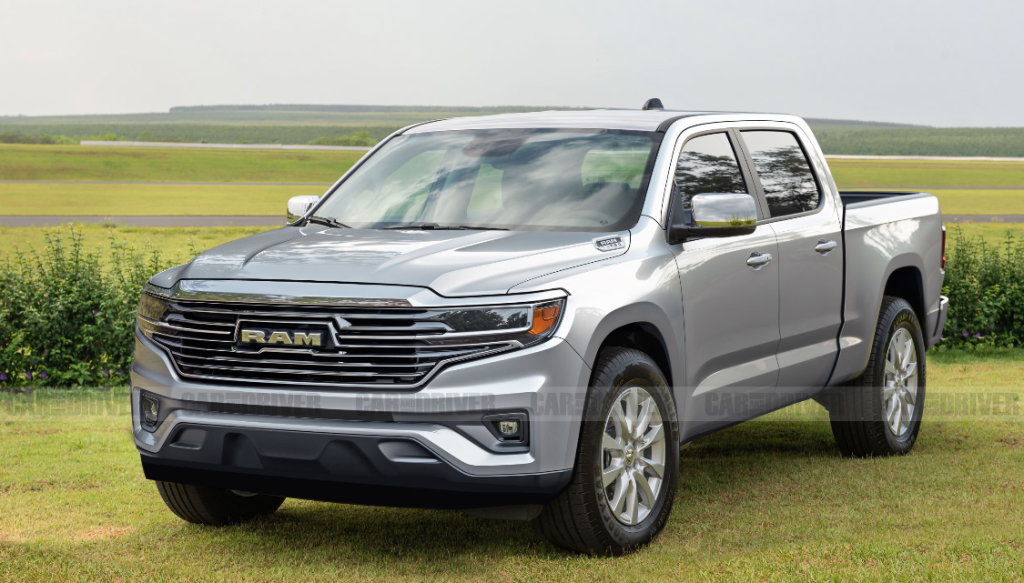
2028 Ram Dakota
After over a decade away, Ram will return to the lucrative mid-size truck segment in 2027. Ram has confirmed that its new mid-sizer will revive the Dakota name, and the truck should feature traditional body-on-frame construction via the STLA Frame platform, which can support gas, hybrid, and electric powertrains. A turbocharged four-cylinder powertrain seems likely, but Ram could also fit a hybrid or the Hurricane inline-six. Production is slated to start at the idled Belvidere, Illinois, plant in 2027.
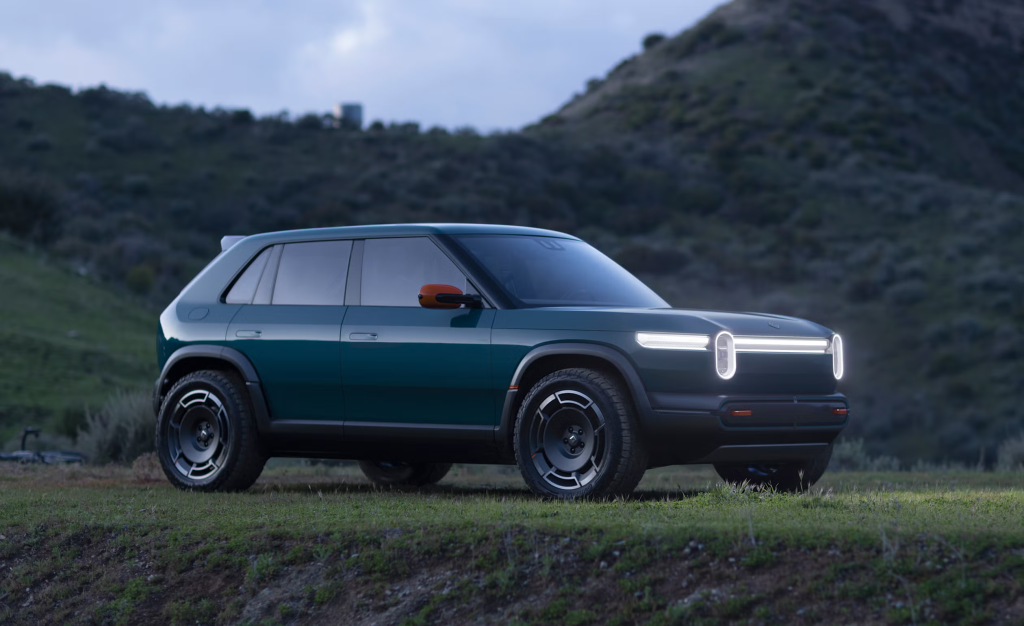
2027 Rivian R3X
After the R2, Rivian will go even smaller with the R3. The subcompact electric SUV features a slightly retro look and will share its platform with the R2. That means it should offer both a rear-wheel-drive single-motor variant and a dual-motor, all-wheel-drive version, while the sporty R3X will get the tri-motor setup. We expect the R3 to start under $40,000, while the high-powered R3X will likely be closer to $50K. Production is expected to start in 2027, with the R3X arriving first.
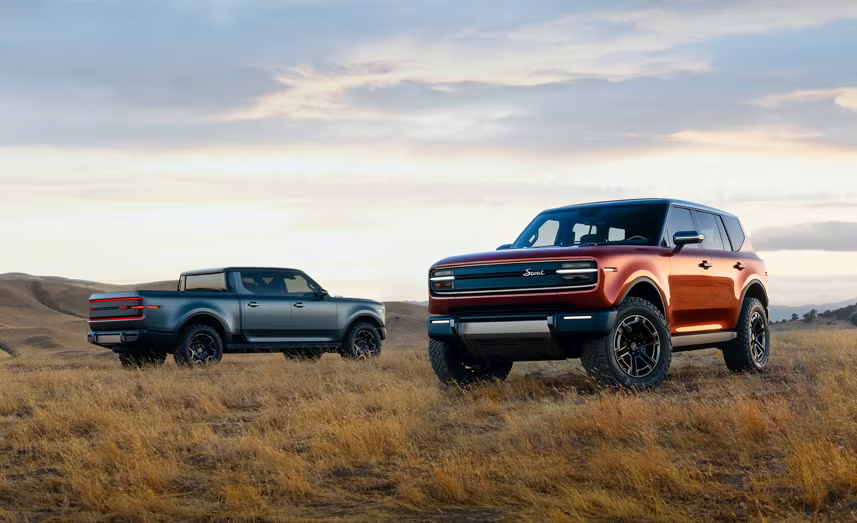
2028 Scout Traveler and Terra
You might remember the Scout nameplate from the 1970s, and it’s officially coming back as a subsidiary of the Volkswagen Group. This new brand will launch two models: the Traveler SUV and Terra pickup truck. Both will use a new body-on-frame platform with a solid rear axle. Two electric motors will provide 1000 pound-feet of torque and all-wheel drive. The Terra and Traveler will also be available as range-extender plug-in hybrids, adding a gas engine to recharge the battery. The EVs are expected to achieve a 350-mile range while the “Harvester” PHEVs will max out at 500 miles. Both models will be built at a new factory in South Carolina starting in 2027, with a starting price under $60,00
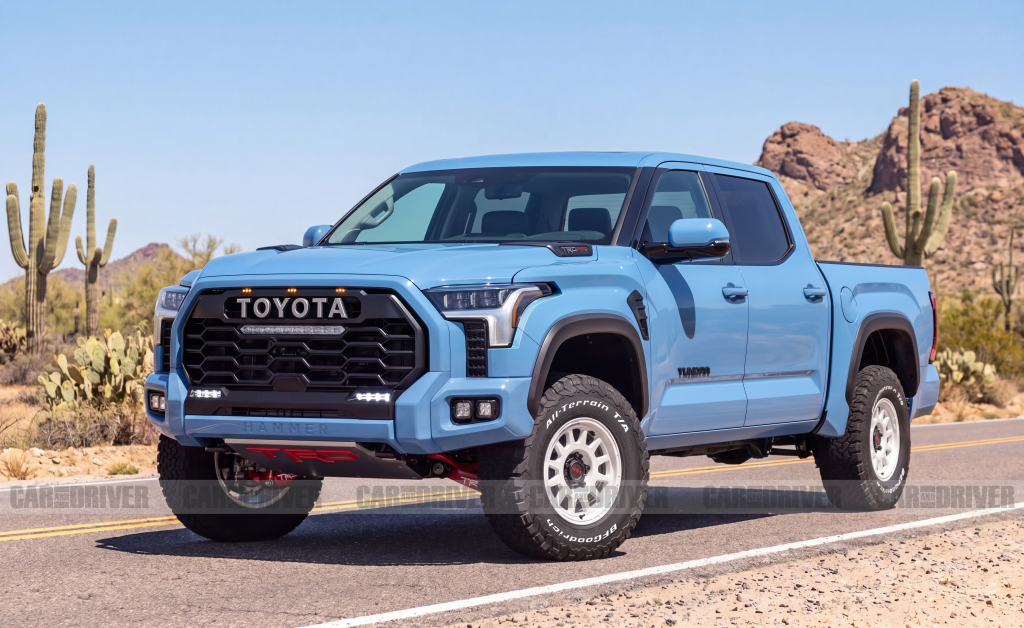
2027 Toyota Tundra TRD Hammer
While Toyota already offers the Tundra TRD Pro off-roader, the upcoming Tundra TRD Hammer will arrive as a true competitor to the Ford F-150 Raptor. An upgraded suspension setup will be paired with a more potent powertrain. Sadly, we don’t expect to see a V-8 under the hood, but the twin-turbo 3.4-liter V-6 hybrid powertrain will likely be boosted to over 450 horsepower, and possibly even as high as 500 hp. Toyota will also fit new steel bumpers to improve approach and departure angles and more capable BFGoodrich All-Terrain T/A KO3 rubber, likely measuring 37 inches in diameter. We expect the Tundra TRD Hammer to be revealed in 2026 and go on sale for the 2027 model year, likely starting at over $80,000.
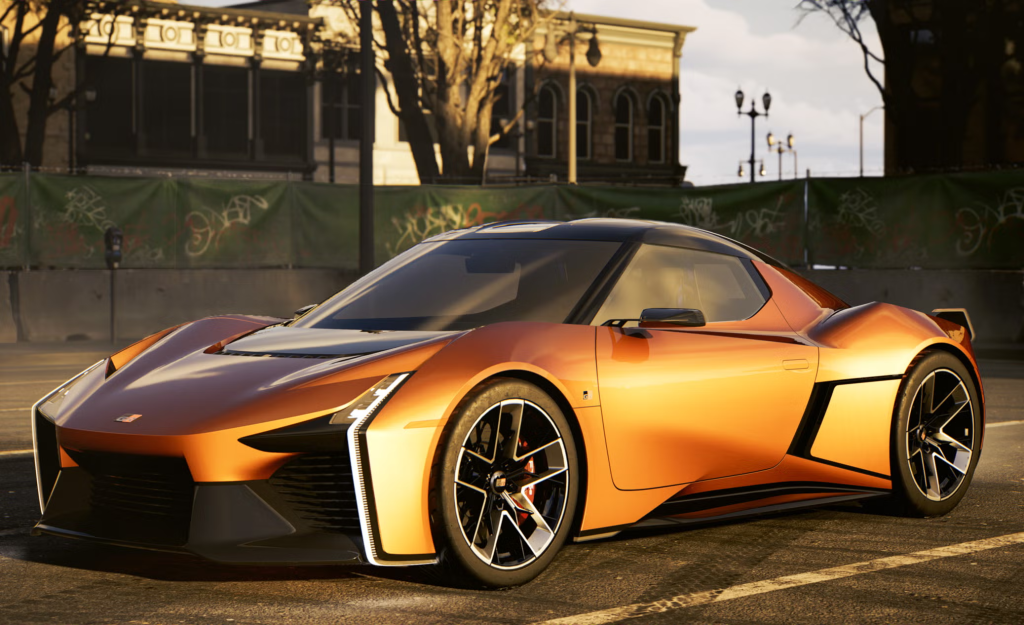
2027 Toyota MR2
Toyota is on a bit of a sports-car kick of late, remaining committed to the GR86, and following up the latest Supra with the 641-hp GR GT. Next, Toyota is looking at resurrecting the midship runabout two-seater known as the MR2. Previously thought to be electric, after Toyota showed a concept called the FT-Se, we now expect the coupe to feature a four-cylinder engine, possibly with hybrid assistance, after Toyota created a mid-engined GR Yaris-based testbed in 2025. Trademark filings suggest the new MR2 could live under the GR brand just like the GR GT, and arrive devoid of Toyota badges.
(Bloomberg) — Nestlé SA Chief Executive Officer Philipp Navratil said lower coffee and cocoa prices should help improve margins this year as the foodmaker works to reignite growth.
“Net-net commodity prices or input costs are favorable in 2026 compared with 2025,” Navratil said at a consumer conference in Paris on Tuesday. “That’s why you should expect margins to be higher and improving through the year as those better costs in those two commodities are coming through.”
Coffee and cocoa inflation drove up Nestlé’s cost base in the past year, prompting the maker of Nescafé coffee and KitKat candy bars to raise prices across many markets. While those commodities have become less costly, the company is still monitoring the potential impact from geopolitical tensions, Navratil said.
“You have obviously some inflationary pressure from other places like the Middle East crisis that we will still have to see,” he said, adding that the company is hedged through the first half of the year.
Nestlé plans an additional 600 million Swiss francs ($763 million) in advertising and promotional spending this year, reinvesting savings generated through cost efficiencies into its “growth platforms,” the CEO said. “The goal is to accelerate those businesses and drive high single-digit growth.”
Think of it as being like a dinner party where the hosts are in the midst of a tense argument when you arrive.
Football fans travelling to North America for the continent’s first co-hosted World Cup will find three host countries who have endured a tense time.
The tournament, which will take place across a sprawling 16 host cities and three countries, comes after a period of fractious relations between its hosts: the US, Canada and Mexico.
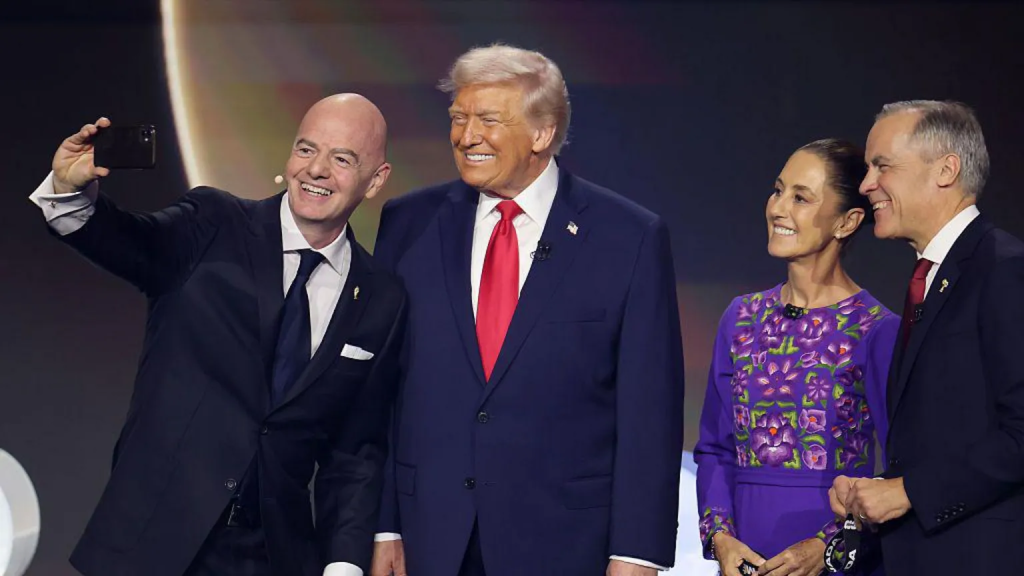
The underlying issues seemed distant when the countries’ leaders met for the draw in Washington DC in December and posed for a selfie with Fifa boss Gianni Infantino. But teaming up for a full 39-day tournament is likely to be a different ball game.
US President Donald Trump has been unashamedly open about the fact that the US is the dominant power on the continent. That means the very real tensions between the three nations on issues such as trade, immigration and drug-trafficking – which have all simmered since Trump returned to office – could spill back into view.
On the other hand, get it right and the World Cup could forge closer ties between the trio.
Tensions over trade, tourism – and Trump
Mexico and Canada, the top trading partners for the US, will not have forgotten that they were among the first countries to be targeted by Trump with tariffs.
Canada – which was also angered by Trump’s repeated comments about making the country a “51st state” of the US – hit back with its own counter-measures. Provinces pulled US alcohol from shelves and Canadians significantly curbed travel south, which irritated the US in return.
The issues Canada and Mexico both have with the US have also impacted relationship between them, suggests Carlo Dade, director of international policy at the University of Calgary.
Canada had been accused of throwing Mexico under the bus ahead of Trump’s second term, as Canadian and US officials argued that Mexico was serving as a back door in North America for Chinese investment.
“It was downright disrespectful,” Dade comments.
That means Canadian Prime Minister Mark Carney has also found himself trying to patch things up with Mexico as he tries to diversify trade away from the US.
Three’s a crowd
A World Cup has never before been hosted across three countries. And given that the 2026 tournament is spanning an entire continent, there is a wide array of different authorities involved.
With fans travelling between the three nations to watch matches, stepped-up US immigration enforcement efforts could create logistical headaches and inflame already frayed nerves.
And American security concerns – heightened because of the ongoing Iran war – could add new layers of frustration and the potential for seemingly innocuous incidents to escalate unexpectedly.
US rights groups urge caution for World Cup visitors
“Co-hosting these global sporting events is not necessarily a recipe for a lovey-dovey relationship between the co-hosts,” says Lindsay Sarah Krasnoff, an author and clinical assistant professor of global sport at New York University.
Krasnoff says that while the women’s 2023 World Cup hosted by New Zealand and Australia was a net positive, the joint Japan-South Korea men’s tournament in 2002 was a “mixed bag” for two nations with a long and uneven history. “It didn’t negatively impact the bilateral relationship, but it’s kind of viewed historically as kind of a draw,” she adds.
Fifa itself has voiced great hopes for the model, saying: “It’s a moment when three countries and an entire continent collectively say: ‘We are united as one to welcome the world and deliver the biggest, best and most inclusive FIFA World Cup ever.’”
Papering over the cracks?
The leader of each nation may want to use the tournament not only to show they can get along with their neighbours, but to prove a point to those who criticise them on domestic issues.
That is certainly true of Mexico, where there has been a degree of doom and gloom around co-hosting. There have been persistent questions over the readiness of the capital’s main airport, its saturated public transport system and the revamped Azteca stadium. Not to mention the appearance of cartel members on the streets a few months ago in a short-lived but widespread display of violence.
And now, the main teachers’ union is holding a nationwide strike over pensions and conditions – and massive protests which threaten to close the main thoroughfares to the matches. Their slogan is “without a solution (to their demands), there will be no kick off”.
But throughout all the challenges, Mexican President Claudia Sheinbaum has remained resolutely upbeat.
“It’s time to witness the best football in the world and to share with everyone who we are – not only a country of immense cultural heritage, but of an empowered people,” she said last year.
It would be wrong to paper over the cracks or whitewash the issues Mexico has faced in the run-up to kick, argues Mexican football journalist, Rafael Puente.
“I really hope the fans show patience and good behaviour in the face of some of these problems which we can’t hide,” Puente adds. “The only thing we can hope for is the excitement, illusion and expectation which the Mexican people have shown in the past, particularly around the participation of the national team.”
Trio eye goals beyond the tournament
Analysts have suggested that the three neighbours could manage some other breakthroughs if they can get the sport right over the next month or so.
The trio are in the middle of a challenging review of a landmark North American free trade agreement, known as the USMCA. The review has left uncertainty hanging over a trading partnership that has been in place in some form since 1994.
Mexico has launched formal talks with the US, something Canada has yet to do.
Canada, which is seeking closer trade ties with China, and Mexico, which has increased tariffs on the Asian country, are also moving in different direction with respect to the Trump administration’s “elevation of the importance of China as a primary consideration”, says Dade, of the University of Calgary.
The three posed for a selfie with Fifa boss Gianni Infantino during the tournament draw in December
But the the World Cup offers an opportunity for diplomacy – as we saw when the Trump, Carney and Mexico’s Claudia Sheinbaum were all smiles together at the tournament draw in December.
“Anytime you get leaders together, it’s generally a good thing,” Dade comments.
For his part, Trump, who regularly boasts of his nation being the “hottest” in the world, clearly views the World Cup as a chance for the US to bask in the global limelight.
His desire to dominate the proceedings, whether by attending events or firing off Truth Social posts, might foster resentment among America’s two neighbours and, ultimately, cause damage to North American relations in the longer term.
On the other hand, he is heavily invested in the tournament’s success – and may take special efforts to avoid the kind of diplomatic incidents that could mar proceedings.
Football is a funny old game, as the cliche goes. Just as the sport itself is unpredictable, there is no telling which way this new experiment in three-way hosting will go.
“It was always going to be very complicated and very complex from the get go,” Krasnoff observes, “even when the bid was first awarded.”
The 2022 World Cup attracted more than a million fans to Qatar
Fifa has been warned it is putting fans’ health at risk by introducing a bottle ban at this summer’s World Cup.
Fans will not be allowed to take reusable water bottles into World Cup stadiums due to safety concerns, Fifa said in a late policy change.
The official stadium code of conduct previously stated: “For the avoidance of doubt, empty, transparent, reusable plastic bottles, up to (1 litre in) capacity, may be brought into the stadium.”
But seven days before the tournament kicks off on 11 June, bottles – along with cups, jars and cans – have been prohibited, with Fifa saying it will lower the risk of injury caused by fans throwing missiles.
“Fifa is committed to protecting the health and safety of all players, referees, fans, volunteers, and staff,” football’s world governing body said in a statement.
Fans will be able to buy water in the stadium and Fifa has promised not to charge above their usual venue prices.
But heat experts have criticised the U-turn, with one saying the ban “will clearly heighten the risk of heat-related health incidents”.
In May, scientists warned that Fifa’s heat safety measures for the tournament are “inadequate”, as temperatures at 14 of the 16 host venues are set to exceed dangerous levels.
“Fifa works closely with each host city committee and local authorities on heat mitigation factors for fans travelling to the stadium, which can include resources such as misting stations, fans, hydration stations, cooling tents and more around the stadium footprint,” Fifa’s statement said.
“Inside the stadium footprint, pricing for water bottles for the Fifa World Cup 2026 will remain consistent with other events held at each stadium.”
The change in policy comes amid complaints that fans are being hit by “extortionate” ticket prices and inflated train fares.
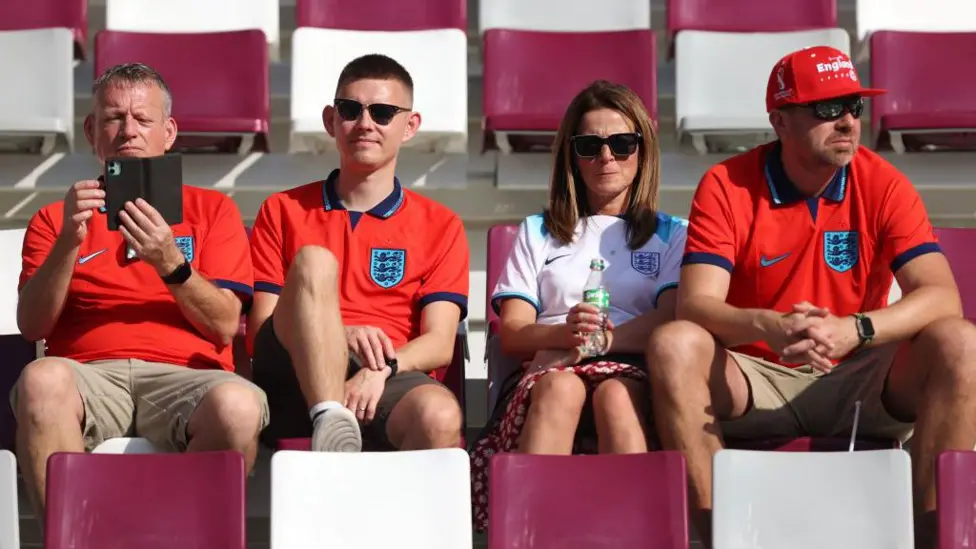
Fans were also prevented from taking bottles into stadiums at the last World Cup in Qatar.
The Free Lions England fans’ group called the move a “strange, late change”.
In a statement posted on X, it added: “In all of our discussions, free water availability in stadiums was a key one and we were assured by Fifa that this would be the case and that fans will have the ability to bring their own water bottle.
“Naturally, the immediate thought from supporters is this is just the latest money-grab. For how hot the stadiums will be, many in open air, just let fans bring a bottle if they want to.
“We hope the water fountains in stadiums will still be free, hopefully you aren’t charged in the queue!”
‘A basic first defence against the extreme heat risks’
Fifa have responded to heat safety concerns by introducing one three-minute hydration break in each half for every game at the tournament.
But Ollie Jay, a professor of heat and health at the University of Sydney, says he is more worried about spectator welfare than that of players.
“If you look at the athlete population, all of them are very fit,” Jay said.
“Whereas if you think about the spectators, you’ve got a broad range of different people that will be attending, from young kids to elderly people, people with chronic diseases, people taking different types of medications – all of which results in different levels of heat sensitivity.
“Your average spectator is probably going to be less resilient to the heat than these highly-conditioned professional athletes.”
He warned that heat strain could accumulate progressively as fans are exposed to heat on their journey to the game and risk arriving at the stadium in a state of dehydration.
“It’s not just the temperature that we need to be concerned about,” Jay added.
“If you think about your average spectator sitting in a closely confined area surrounded by lots of other people, they’ll be in direct sunlight. It might be humid. The airflow might be low.
“And therefore, the amount of heat stress that their body has to cope with could be quite significant.”
In May, Jay was one of 20 experts who signed an open letter to Fifa warning that guidelines left players at risk of serious harm.
Plans for misting systems and shaded areas were called “inadequate” – and Jay says that the bottle ban endangers fans further: “Unless the cooling controls are really successful, I would imagine this decision [to ban water bottles in stadiums] will clearly heighten the risk of heat-related health incidents.”
Dr Theodore Keeping from Imperial College London, author of a World Weather Attribution study of heat safety at the tournament, stressed the importance of access to water.
“Allowing fair and equitable access to hydration is a basic first defence against the extreme heat risks climate change is bringing to this World Cup,” Keeping said.
Andrew Simms, from the New Weather Institute, said: “Is Fifa climate-trolling the game it’s meant to protect?
“It is already staging the most polluting World Cup ever, sponsored by one of the world’s biggest climate-polluting oil companies, and has heat safety protocols heavily criticised by world leading health experts.
“Now making it even more difficult for fans to stay safe in a competition vulnerable to global heating seems to be a reckless rejection of Fifa’s duty of care.”