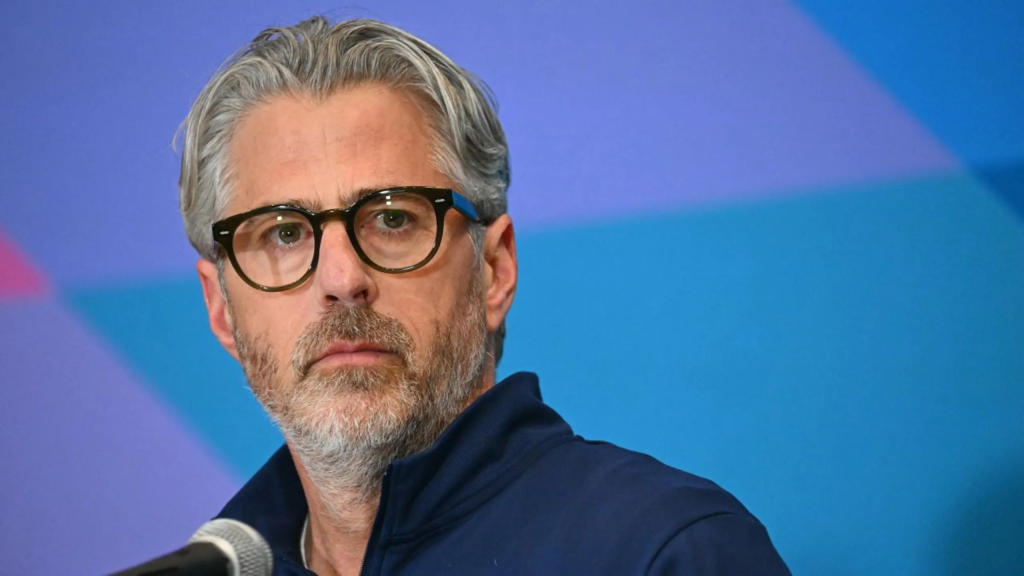
The 2028 Olympics Organising Committee chairman declined to resign Wednesday despite political pressure from the Los Angeles mayor following his appearance in the Jeffrey Epstein files and acknowledged that “maybe Russia and Belarus will come back”.
The remarks came at a press conference after the seventh visit of the International Olympic Committee Coordination Commission to Los Angeles, where Casey Wasserman directly addressed the issue that had put his future at the head of the 2028 Olympic project under pressure.
Asked whether he had considered stepping aside and whether he had spoken to Los Angeles Mayor Karen Bass after she called in February for him to leave, Wasserman replied curtly, ‘No and yes’, making clear his refusal while confirming that he has been in contact with the city leader since the controversy spilled over.
The origin of the case lies in documents published by the United States Department of Justice in January, which included 2003 emails between Wasserman and Ghislaine Maxwell, Epstein’s former partner, later convicted of sex trafficking. The documents revealed flirtatious or suggestive exchanges between the two, although the official has not been accused of any offence related to Epstein and has previously maintained that he never had a personal or business relationship with him.
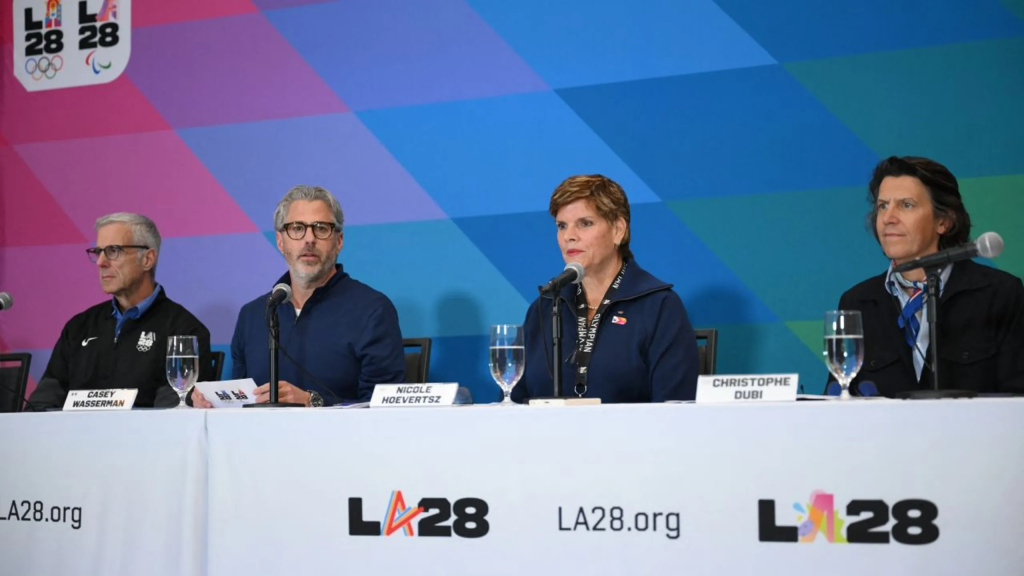
The publication of those documents triggered a public crisis for the LA28 leader, with Bass among the political voices calling for his departure and with pressure also extending to figures linked to his talent agency. The episode threatened to erode the authority of a man who has been one of the main faces of the Los Angeles Olympic project since the bid stage, although the organising committee closed ranks around him.
In January, Wasserman issued a statement saying that he regretted his correspondence with Maxwell and that it had taken place “long before her horrific crimes came to light”. The explanation was the official’s first formal response after his name appeared in the files and served as the basis for the position LA28 has maintained since then: acknowledging the controversy, reviewing the background and maintaining that there were no grounds to remove him.
Shortly after the publication of the documents, LA28 carried out a review, with the help of an external law firm, of Wasserman’s past interactions with Epstein and Maxwell, with the cooperation of the chair himself. The assessment concluded that the relationship did not go beyond what had already been publicly documented, while the Los Angeles Times reported that the executive committee backed his continuation, citing “the strong leadership he has exhibited over the past 10 years”. That support was also expressed by Reynold Hoover, chief executive of LA28, who had already defended Wasserman’s continuation in February and remained firm in that position.
Wednesday, Wasserman tried to present his relationship with Bass as an active institutional one despite the public clash in February. “I talk to the mayor weekly, if not more frequently, and our conversations are between us,” he said. “They continue to be thoughtful and productive with a completely shared vision on delivering the greatest Games for the city and our community.” His message sought to convey that the mayor’s call for his resignation has not broken coordination between the city and the Olympic committee.
Leave a Reply